
Ever looked at your payslip and wondered what those strange combinations of letters and numbers actually mean? You’re not alone. For many employees, tax codes feel confusing, yet they directly affect how much money lands in your bank account each month.
In this guide on the list of tax codes and what they mean, we’ll break everything down in simple, human terms. You’ll learn how tax codes work, why they change, what the most common ones mean, and how to check if yours is correct. By the end, you’ll be able to read your payslip with confidence instead of guessing.
What Are Tax Codes? PAYE Basics Explained
Before diving into the list of tax codes and what they mean, it helps to understand what a tax code actually is.
In the UK PAYE (Pay As You Earn) system, a tax code is assigned by HMRC to tell your employer how much income tax to deduct from your salary or pension. It’s essentially a shortcut that reflects your personal tax-free allowance and any adjustments.
For example:
- Your tax-free allowance (how much you can earn before paying tax)
- Benefits or deductions you might have
- Previous underpaid or overpaid tax
If your tax code is correct, you pay the right amount of tax automatically. If it’s wrong, you might pay too much—or too little.
List of Tax Codes and What They Mean in the UK
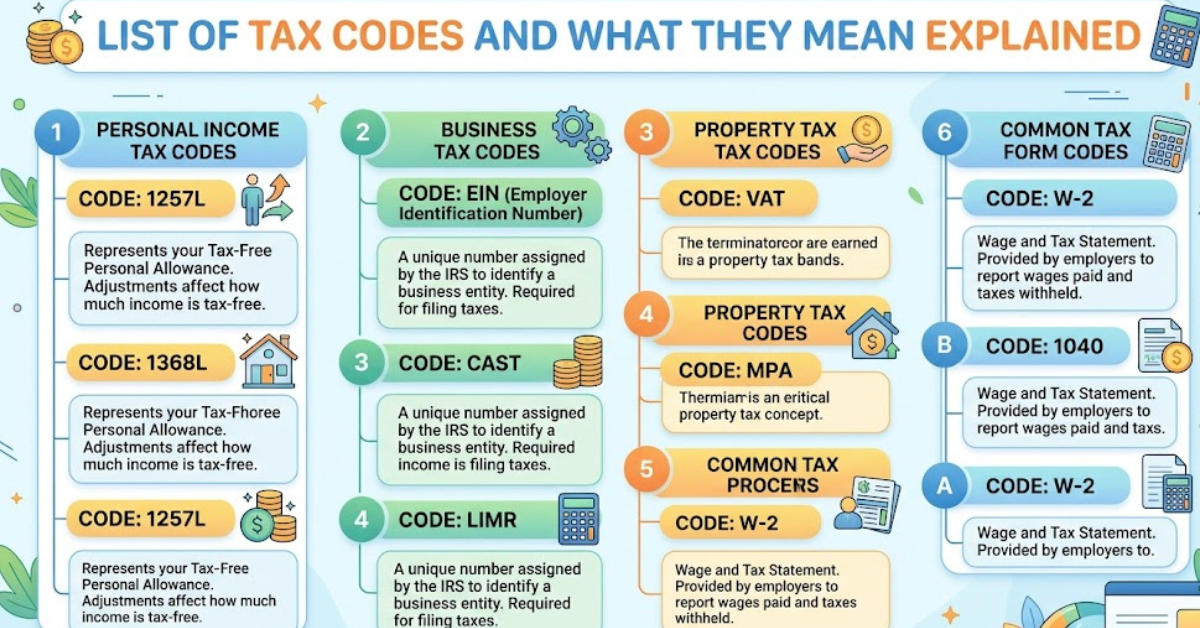
Here is the core list of tax codes and what they mean in everyday situations. These are the most commonly used PAYE tax codes you’ll see on payslips.
1. 1257L (Most Common Tax Code)
- Standard tax code for most employees
- Means you get the full personal allowance (£12,570 in the UK)
- “L” indicates you are entitled to the basic tax-free allowance
2. BR (Basic Rate)
- All income taxed at 20%
- Used for second jobs or pensions
- No personal allowance applied
3. D0
- All income taxed at 40% (higher rate)
- Often applied to secondary income sources
4. D1
- All income taxed at 45% (additional rate)
- Used for very high earners or specific income streams
5. 0T
- No personal allowance applied
- Used when HMRC doesn’t have enough information
- Can result in higher deductions temporarily
6. K Code (e.g., K250)
- Indicates you owe tax from previous years or benefits in kind
- Increases taxable income rather than reducing it
7. W1 / M1 (Emergency Tax Codes)
- Temporary tax code
- Used when your tax situation is not fully updated
- Reset every pay period
8. S, C Prefix Codes (Scotland & Wales)
- S: Scottish tax rates apply
- C: Welsh tax rates apply
- Combined with standard codes like S1257L or C1257L
This list of tax codes and what they mean helps you quickly identify why your salary may change unexpectedly from month to month.
How Tax Codes Are Calculated
Understanding the list of tax codes and what they mean becomes easier when you know how HMRC builds them.
Tax codes are based on:
- Your personal allowance
- Employment status (single job, multiple jobs, pension)
- Benefits like company cars or health insurance
- Tax owed from previous years
HMRC adjusts your code automatically when any of these factors change.
For example:
If you start a second job, your allowance might be split or removed from that job’s income, leading to a BR or 0T code.
Why Your Tax Code Might Change
Your tax code isn’t fixed forever. It can change due to:
- Starting or leaving a job
- Getting a second income source
- Receiving company benefits
- Underpaying or overpaying tax previously
- Changes in tax legislation
This is why reviewing the list of tax codes and what they mean regularly is important—it helps you spot errors early.
How to Check or Fix Your Tax Code
If something doesn’t look right in the list of tax codes and what they mean, you can take action.
Steps to check:
- Look at your payslip or P60
- Compare your code with HMRC guidelines
- Log into your tax account (if available)
- Contact HMRC if something seems incorrect
Common fixes:
- Updating employer details
- Correcting benefit records
- Adjusting personal allowance allocation
Even a small error in your tax code can affect your take-home pay significantly.
Practical Tips for Employees
- Always check your payslip monthly
- Don’t ignore sudden tax deductions
- Keep records of job changes or benefits
- Compare your code against the official list of tax codes and what they mean
- Act quickly if you see emergency codes like W1/M1
Key Takeaways
- Tax codes control how much tax you pay through PAYE
- The list of tax codes and what they mean includes standard, emergency, and special codes
- Most people use 1257L, but many variations exist
- Incorrect codes can lead to overpaying or underpaying tax
- Always check your payslip regularly for accuracy
Frequently Asked Questions FAQs
1. What is the most common tax code in the UK?
The most common tax code is 1257L, which means you receive the standard personal allowance. It’s the default for most employees.
2. Why did my tax code change suddenly?
Your tax code may change due to job changes, benefits, or updates from HMRC. Reviewing the list of tax codes and what they mean can help you understand the reason.
3. What does a K tax code mean?
A K code means you owe tax from previous years or have taxable benefits. It increases your taxable income instead of reducing it.
4. What is an emergency tax code?
Emergency tax codes like W1 or M1 are temporary codes used when HMRC doesn’t have full information about your income.
5. How do I fix an incorrect tax code?
You should contact HMRC or update your employment details. Checking the list of tax codes and what they mean helps you confirm the correct code.
6. Do tax codes affect my take-home pay?
Yes, your tax code directly determines how much tax is deducted from your salary each month.
Conclusion
Understanding the list of tax codes and what they mean gives you real control over your finances. Instead of guessing why your paycheck changes, you can quickly identify what your tax code is telling you.
Whether you’re on a standard code like 1257L or something more complex like K or D1, knowing how these codes work helps you avoid errors and stay financially informed. If your payslip ever looks off, now you know exactly where to start.