
Have you ever looked at a burning electrical appliance and wondered what you’re actually allowed to use on it without making things worse? It’s a critical safety question, especially in homes, offices, and industrial settings where electricity is always present.
Understanding which types of fire extinguisher should you use on live electrical equipment? can literally prevent a small fire from turning into a deadly accident. In this guide, you’ll learn the safest extinguisher types, why they work, what to avoid, and how electrical fire safety really works in practice.
Understanding Electrical Fires and Risks
Electrical fires are not like regular fires. They often start from faulty wiring, overloaded sockets, damaged appliances, or short circuits. The danger is that electricity may still be flowing, which adds the risk of electric shock.
When dealing with which types of fire extinguisher should you use on live electrical equipment?, the key issue is conductivity. Water and many foam-based solutions conduct electricity, which can worsen the situation or harm the user.
Electrical fires fall under Class C (US) or Class E (in some regions) depending on classification systems.
Which Types of Fire Extinguisher Should You Use on Live Electrical Equipment?
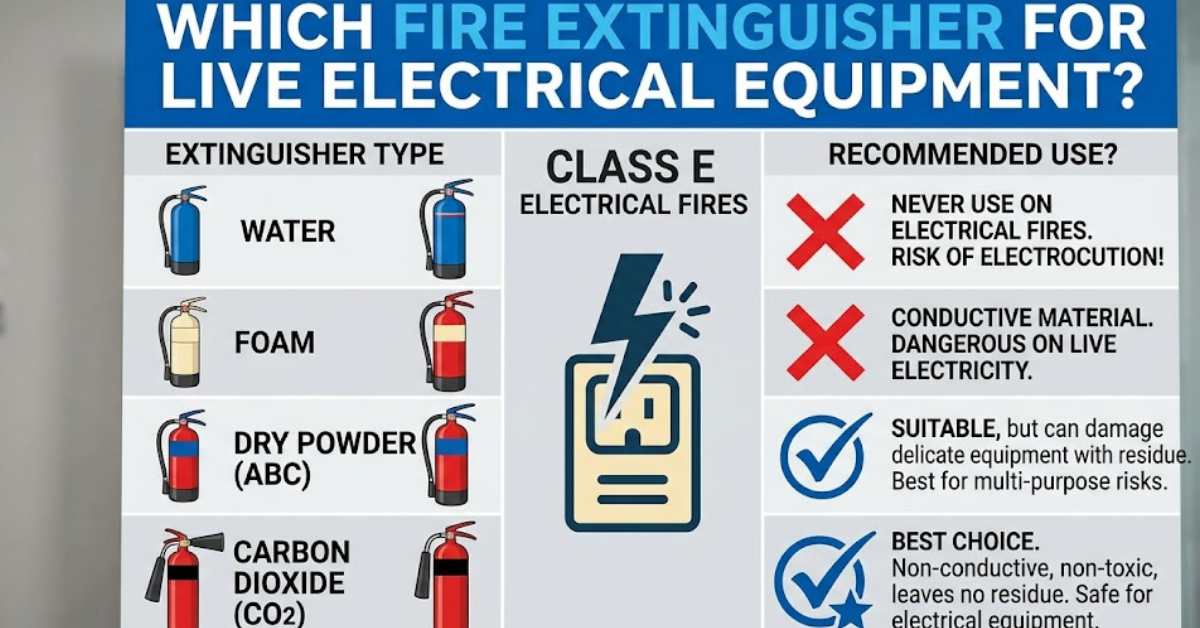
When asking which types of fire extinguisher should you use on live electrical equipment?, the answer comes down to non-conductive extinguishing agents that do not carry electricity.
The safest and most recommended options include:
- Carbon Dioxide (CO2) extinguishers
- Dry Powder (ABC or BC type) extinguishers
Let’s break them down in detail.
Carbon Dioxide (CO2) Fire Extinguishers
CO2 extinguishers are one of the most effective choices for electrical fires. They work by displacing oxygen and cooling the fire, without leaving any residue.
If you’re unsure about which types of fire extinguisher should you use on live electrical equipment?, CO2 is often the first professional recommendation in offices, server rooms, and labs.
Why CO2 works well:
- Non-conductive (safe around electricity)
- Leaves no residue (ideal for electronics)
- Quickly smothers flames
However, they are less effective in open or windy environments because the gas disperses quickly.
Dry Powder (ABC) Fire Extinguishers
Dry powder extinguishers are another widely used option. They interrupt the chemical reaction of fire and are versatile across multiple fire classes.
When considering which types of fire extinguisher should you use on live electrical equipment?, dry powder is often included because it can safely handle energized electrical sources.
Advantages:
- Works on electrical fires (Class C/E)
- Effective on multiple fire types (solid, liquid, gas)
- Quick fire knockdown
Limitations:
- Leaves a messy residue
- Can damage sensitive electronic equipment
- Reduces visibility during discharge
Why Water and Foam Extinguishers Are Dangerous
A major mistake people make when learning which types of fire extinguisher should you use on live electrical equipment? is assuming any extinguisher will work.
Water and standard foam extinguishers should NEVER be used on live electrical fires because:
- Water conducts electricity
- Risk of electrocution is extremely high
- Foam may still contain water content
Safe Choices Summary
To quickly recap which types of fire extinguisher should you use on live electrical equipment?:
- CO2 extinguishers → Best for offices and electronics
- Dry powder extinguishers → Versatile and widely used
- Avoid water and standard foam at all costs
The safest approach is always to cut power first if possible before attempting to extinguish the fire.
Common Mistakes People Make
Even when people know which types of fire extinguisher should you use on live electrical equipment?, mistakes still happen:
- Using water because it’s “readily available”
- Standing too close to energized equipment
- Not checking extinguisher labels (Class ratings)
- Ignoring evacuation when fire grows too large
Fire safety is about quick thinking, not just equipment.
Fire Classes and Electrical Safety Basics
Understanding fire classifications helps clarify which types of fire extinguisher should you use on live electrical equipment?:
- Class A: Ordinary combustibles (wood, paper)
- Class B: Flammable liquids (oil, petrol)
- Class C/E: Electrical fires (live equipment)
CO2 and dry powder are specifically designed to handle energized electrical risks safely.
Practical Fire Safety Tips
Here are practical steps beyond just knowing which types of fire extinguisher should you use on live electrical equipments?:
- Always keep an extinguisher near electrical panels
- Regularly inspect wiring and sockets
- Avoid overloading extension boards
- Learn extinguisher PASS method (Pull, Aim, Squeeze, Sweep)
- Ensure proper training in workplaces
Preparedness often matters more than reaction.
FAQ
1. Which types of fire extinguisher should you use on live electrical equipments in a home?
You should use CO2 or dry powder extinguishers. These are safe because they do not conduct electricity and can suppress flames quickly.
2. Can I use water if the electricity is still on?
No. Water should never be used on live electrical equipments. It increases the risk of electric shock and makes the fire more dangerous.
3. Which types of fire extinguisher should you use on live electrical equipments in offices?
CO2 extinguishers are most common in offices because they protect computers and servers without leaving residue.
4. Is dry powder safe for electrical fires?
Yes, dry powder is safe for electrical fires. However, it can damage electronic devices due to residue, so CO2 is often preferred for sensitive equipment.
5. What happens if the wrong extinguisher is used?
Using the wrong extinguisher can cause electrocution, spread the fire, or damage equipment. That’s why knowing which types of fire extinguisher should you use on live electrical equipments? is essential.
6. Do I need training to use a fire extinguisher?
Yes, basic training is highly recommended. Knowing how and when to use it improves safety and effectiveness during emergencies.
Conclusion
Electrical fires require fast but careful action, and choosing the right extinguisher can make all the difference. Now that you understand which types of fire extinguisher should you use on live electrical equipment?, you know that CO2 and dry powder are the safest options, while water and foam must be avoided.
The key takeaway is simple: match the extinguisher to the fire type and always prioritize safety first. With the right knowledge and preparation, you can respond confidently and reduce serious risks when electrical fires occur.