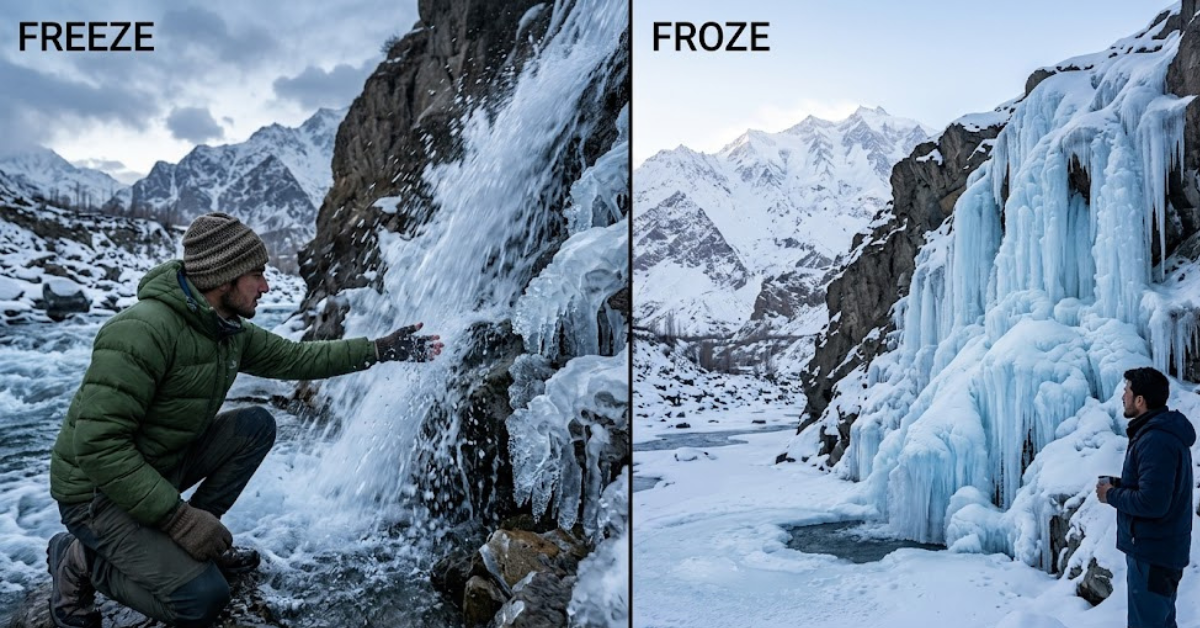

English verbs can be tricky, especially when they change form to indicate different tenses. One common source of confusion is freeze vs froze. Since both words come from the same verb, many learners and even native speakers occasionally struggle to know which one is correct in a sentence.
The good news is that the difference is straightforward once you understand how verb tenses work. Freeze is the present tense form, while froze is the simple past tense form. Knowing when to use each can improve your grammar, writing, and everyday communication.
In this guide, we’ll explore the meanings, grammar rules, examples, common mistakes, and memory tricks that make these two words easy to master.
Understanding Freeze vs Froze
The words freeze and froze are different forms of the same irregular verb.
The verb forms are:
- Present tense: freeze
- Past tense: froze
- Past participle: frozen
Examples:
- I freeze leftovers for later.
- Yesterday, I froze the leftovers.
- The leftovers have been frozen for weeks.
The tense of the sentence determines which form you should use.
What Does Freeze Mean?
Freeze is the base form and present tense of the verb.
Freeze Definition
Freeze-means:
- To become solid because of cold temperatures
- To make something cold enough to become solid
- To stop moving or functioning
- To remain motionless suddenly
Examples of Freeze
- Water will freeze at low temperatures.
- I freeze extra vegetables to keep them fresh.
- The computer may freeze during updates.
- Some animals freeze when they sense danger.
In each example, the action is happening now, regularly, or in the future.
What Does Froze Mean?
Froze is the simple past tense of freeze.
Froze Definition
Froze-means:
- Became frozen in the past
- Was made frozen in the past
- Stopped moving or functioning in the past
Examples of Froze
- The lake froze overnight.
- I froze the soup yesterday.
- She froze when she heard the unexpected news.
- My laptop froze during the presentation.
The action has already happened and is completed.
Freeze vs Froze: Key Grammar Difference
The biggest distinction is tense.
Freeze = Present or Future
Use freeze when describing:
- Current actions
- Habits
- General truths
- Future events
Examples:
- I freeze fruit for smoothies.
- Water can freeze during winter.
- The pipes may freeze tonight.
Froze = Past
Use froze when describing actions that happened previously.
Examples:
- The river froze last January.
- He froze the leftovers after dinner.
- The screen suddenly froze yesterday.
If the event happened in the past, froze is usually the correct choice.
Verb Forms of Freeze
Since freeze is an irregular verb, its forms don’t follow the standard “-ed” pattern.
Complete Verb Forms
- Base form: Freeze
- Simple past: Froze
- Past participle: Frozen
- Present participle: Freezing
Examples:
- Freeze the berries.
- The pond froze.
- The pond has frozen.
- The pond is freezing.
Learning all forms helps avoid grammatical mistakes.
Common Uses of Freeze
The word freeze appears in many contexts beyond cold temperatures.
Weather
- Temperatures freeze overnight.
- Rivers freeze during winter.
Food Storage
- People freeze meat and vegetables.
- Restaurants freeze ingredients for preservation.
Technology
- Computers freeze unexpectedly.
- Apps sometimes freeze after updates.
Human Reactions
- People freeze from fear or shock.
- Athletes may freeze under pressure.
Its versatility makes it one of the most commonly used irregular verbs in English.
Common Uses of Froze
Froze appears whenever those same actions occurred in the past.
Weather Examples
- The lake froze last winter.
- The windshield froze overnight.
Food Examples
- She froze several meals for the week.
- They froze the berries after harvesting them.
Technology Examples
- The software froze during installation.
- My phone froze while I was texting.
Emotional Reactions
- He froze when he saw the snake.
- She froze on stage during her speech.
These examples highlight the importance of using the correct tense.
Common Mistakes to Avoid
Many grammar errors occur when writers mix up freeze, froze, and frozen.
Incorrect
- Yesterday, I freeze the vegetables.
Correct
- Yesterday, I froze the vegetables.
Why?
Because the action happened in the past.
Incorrect
- The pond has froze.
Correct
- The pond has frozen.
Why?
After “has,” “have,” or “had,” use the past participle frozen.
Incorrect
- Last night the river freeze.
Correct
- Last night the river froze.
Again, the action occurred in the past.
Memory Tricks to Remember the Difference
Simple reminders can help you choose the right form.
Remember Freeze = Present
Think:
- I freeze food today.
- Water can freeze.
Present actions use freeze.
Remember Froze = Past
Think:
- Yesterday I froze food.
- The lake froze last winter.
If the sentence includes a past time reference, froze is usually the correct choice.
Why Freeze Is an Irregular Verb
Most English verbs form the past tense by adding “-ed.”
Examples:
- Walk → Walked
- Cook → Cooked
Freeze follows a different pattern:
- Freeze → Froze → Frozen
Because it changes internally rather than adding “-ed,” it is classified as an irregular verb.
Related Words and Expressions
Words Related to Freeze
- Freezing
- Frozen
- Frost
- Ice
- Chill
Common Expressions
- Freeze up
- Freeze over
- Freeze solid
- Brain freeze
- Wage freeze
These expressions demonstrate the wide range of situations in which the word appears.
Frequently Asked Questions
What is the difference between freeze and froze?
Freeze is the present tense form of the verb, while froze is the simple past tense form.
Is froze a real word?
Yes. Froze is the correct past tense of freeze.
What is the past participle of freeze?
The past participle is frozen.
Example:
- The lake has frozen.
Which is correct: freeze or froze yesterday?
Froze is correct because yesterday indicates a past action.
Can freeze be used for computers?
Yes. Freeze can describe a computer, phone, or application that stops responding.
Why do people confuse freeze and froze?
Because they are forms of the same irregular verb, many writers struggle to remember which tense each form represents.
Conclusion
Understanding freeze vs froze is mainly a matter of recognizing verb tense. Freeze is the present tense form used for current actions, habits, and future possibilities, while froze is the simple past tense form used for actions that have already happened.
Remember the full pattern—freeze, froze, frozen—and you’ll avoid many common grammar mistakes. Whether you’re describing winter weather, food preservation, technology issues, or emotional reactions, using the correct form will make your writing clearer, more accurate, and more professional.