
Few things are more disappointing than cutting open a watermelon that looks perfect on the outside but turns out bland, dry, or underripe inside. If you’ve ever struggled with choosing the right one, you’re not alone. Learning how to pick a good watermelon can save you money and guarantee sweeter, juicier fruit every summer.
The good news is that ripe watermelons leave clues. From color and weight to webbing and sound, there are several easy ways to tell whether a melon is worth taking home. In this guide, you’ll learn practical methods shoppers use to spot the best watermelon at the store without guessing.
Why Choosing the Right Watermelon Matters
A ripe watermelon should be:
- Sweet
- Juicy
- Crisp
- Flavorful
An unripe one often tastes watery or bland, while an overripe melon can become mushy. Since you can’t see the inside before buying, understanding external signs is the key to making a smart choice.
How to Pick a Good Watermelon at the Store
When shopping, don’t just grab the first melon you see. A few quick checks can dramatically improve your chances of picking a sweet one.
Look for the Field Spot
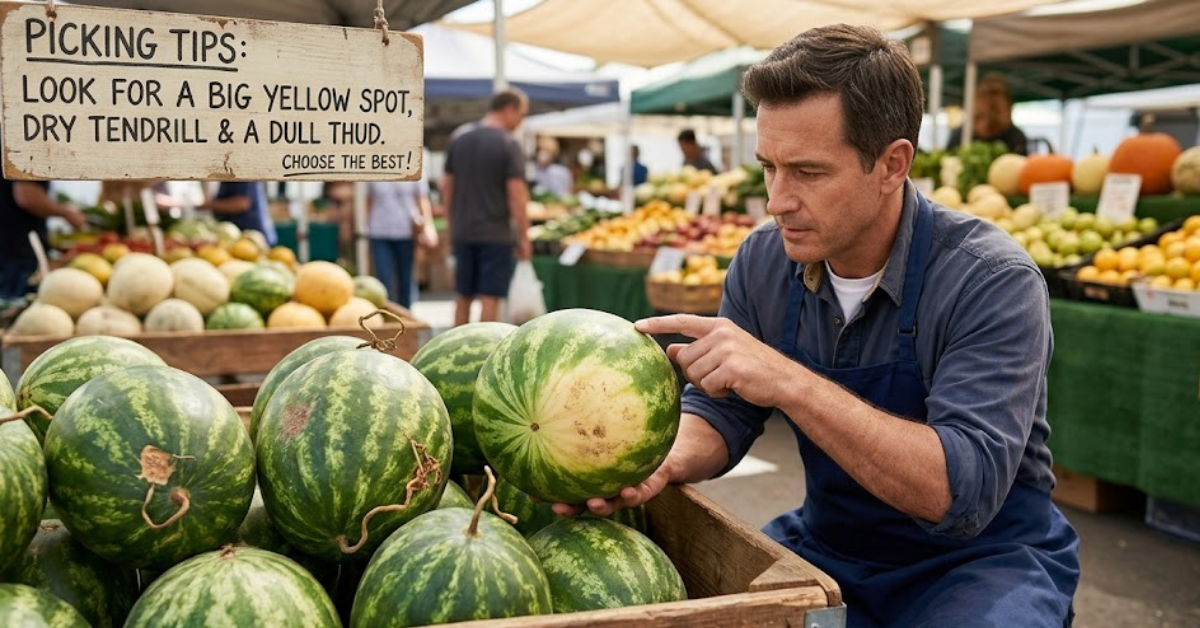
One of the most important signs of ripeness is the field spot. This is the creamy patch where the watermelon rested on the ground while growing.
A ripe melon usually has:
- A creamy yellow or deep golden field spot
- A large, noticeable patch
Avoid melons with:
- White or pale green spots
- No visible field spot at all
The darker yellow color usually means the fruit had more time to ripen naturally on the vine.
How to Pick a Good Watermelon by Color
Color tells you a lot about freshness and maturity.
What to Look For
A good watermelon typically has:
- A deep green rind
- Dull rather than shiny skin
- Consistent coloring
Shiny melons are often underripe because they were picked too early.
Understanding Watermelon Stripes
Many people search for how to pick a good watermelon stripes because stripe patterns can reveal ripeness.
Look for:
- Strong contrast between dark and light stripes
- Clear, well-defined patterns
Faded or blurry stripes may indicate poor ripening.
How to Pick a Good Watermelon by Tapping
The tapping method is one of the oldest tricks in the book. While it may seem strange, it can actually help identify a ripe melon.
What Sound Should a Watermelon Make?
When tapping the watermelon with your knuckles:
- A ripe watermelon produces a deep, hollow sound
- An underripe melon sounds metallic or higher-pitched
- An overripe one sounds dull or flat
This method works because ripe fruit contains more water and developed flesh structure.
How to Pick a Good Watermelon by Sound
Sound testing is closely connected to tapping, but it also involves listening carefully to resonance.
A good melon should sound:
- Hollow
- Full
- Deep
If the sound is weak or muffled, the inside may be soft or overripe.
It takes practice, but comparing several melons side by side makes the difference easier to notice.
Check the Weight for Sweetness
A ripe watermelon should feel surprisingly heavy for its size.
Why does this matter?
Heavier melons usually contain:
- More juice
- Better hydration
- Denser flesh
Pick up two similarly sized watermelons and choose the heavier one whenever possible.
How to Pick a Good Watermelon Webbing
Those brown, rough web-like marks on the rind are called webbing or sugar spots.
Many shoppers avoid them, but they’re actually a positive sign.
What Webbing Means
Webbing often indicates:
- Strong pollination
- Higher sweetness
- Better flavor development
More webbing generally means bees visited the flower frequently, which can improve fruit quality.
Examine the Shape Carefully
Shape matters more than many people realize.
Round vs Oval Watermelons
- Round melons are often sweeter
- Oval melons tend to contain more water
Neither is bad, but if you prefer dessert-like sweetness, round varieties are usually the better option.
Avoid Irregular Shapes
Misshapen melons may develop unevenly due to inconsistent watering or growth problems.
Choose one that looks symmetrical and balanced.
How to Pick a Good Watermelon Seedless
Seedless watermelons follow the same ripeness rules as regular varieties.
Focus on:
- Weight
- Field spot color
- Hollow sound
- Dull skin
Seedless types can sometimes feel firmer, so rely more heavily on the field spot and weight test.
Common Mistakes People Make
Many shoppers unknowingly choose poor-quality watermelons because they focus on the wrong details.
Avoid These Mistakes
- Choosing the shiniest melon
- Ignoring the field spot
- Picking lightweight melons
- Avoiding webbing marks
- Selecting damaged fruit with cuts or bruises
A perfect-looking watermelon isn’t always the sweetest one.
Simple Watermelon Selection Tips
If you want quick and easy advice, remember these practical checks:
- Look for a creamy yellow field spot
- Choose dull skin over shiny skin
- Pick the heavier melon
- Listen for a hollow sound
- Check for healthy webbing
- Avoid dents or soft areas
These small steps can greatly improve your success rate.
How Grocery Stores Handle Watermelons
People often search for how to pick a good watermelon at the grocery store because store conditions vary.
At grocery stores:
- Watermelons may ripen after harvest
- Some are refrigerated too early
- Others sit under bright lighting for long periods
That’s why visual inspection matters more than relying on appearance alone.
Is There a Perfect Watermelon Chart?
Many online guides use ripeness charts showing:
- Field spot colors
- Sound examples
- Shape comparisons
- Texture indicators
While a chart can help beginners, combining several methods works better than relying on a single sign.
No single trick guarantees perfection every time.
Seasonal Timing Matters
Watermelons usually taste best during peak season.
The sweetest melons are commonly found:
- Late spring
- Summer
- Early fall
Out-of-season watermelons may travel long distances and lose flavor quality.
FAQs
How do I know if a watermelon is sweet?
Look for a creamy yellow field spot, heavy weight, dull skin, and strong webbing. These are common signs of sweetness.
Does tapping a watermelon really work?
Yes, tapping can help identify ripeness. A deep hollow sound usually indicates a ripe melon.
What color should a ripe watermelon be?
A ripe watermelon should have deep green coloring with a dull finish and a yellow field spot.
Are webbing marks good or bad?
Webbing is generally a good sign and may indicate better pollination and sweeter fruit.
How can I pick a watermelon without cutting it open?
Use external clues like weight, sound, field spot color, shape, and skin texture.
Is a heavy watermelon better?
Usually, yes. A heavier watermelon often contains more juice and better ripeness.
Should watermelon skin be shiny or dull?
Dull skin is usually a better sign of ripeness than shiny skin.
Conclusion
Learning how to pick a good watermelon doesn’t have to feel complicated. Once you know what signs to watch for, choosing a sweet and juicy melon becomes much easier.
Remember the key indicators:
- Creamy yellow field spot
- Heavy weight
- Hollow sound
- Dull skin
- Strong webbing
- Symmetrical shape
Using these simple techniques can help you confidently choose better fruit whether you’re shopping at a local market or grocery store. The next time you’re standing in front of a pile of watermelons, you’ll know exactly what to look for instead of relying on luck.