
If you’ve ever paused while writing a sentence and wondered whether to use “sale” or “sell,” you’re definitely not alone. These two words look similar, sound closely related, and often confuse even fluent English speakers.
The confusion usually comes down to grammar. One word describes an action, while the other names an event or result. Once you understand that simple distinction, using them correctly becomes much easier.
In this guide, you’ll learn the meaning of both words, their grammatical differences, practical examples, and tips for using them naturally in everyday English.
What Do “Sale” and “Sell” Mean?
Definition of “Sell”
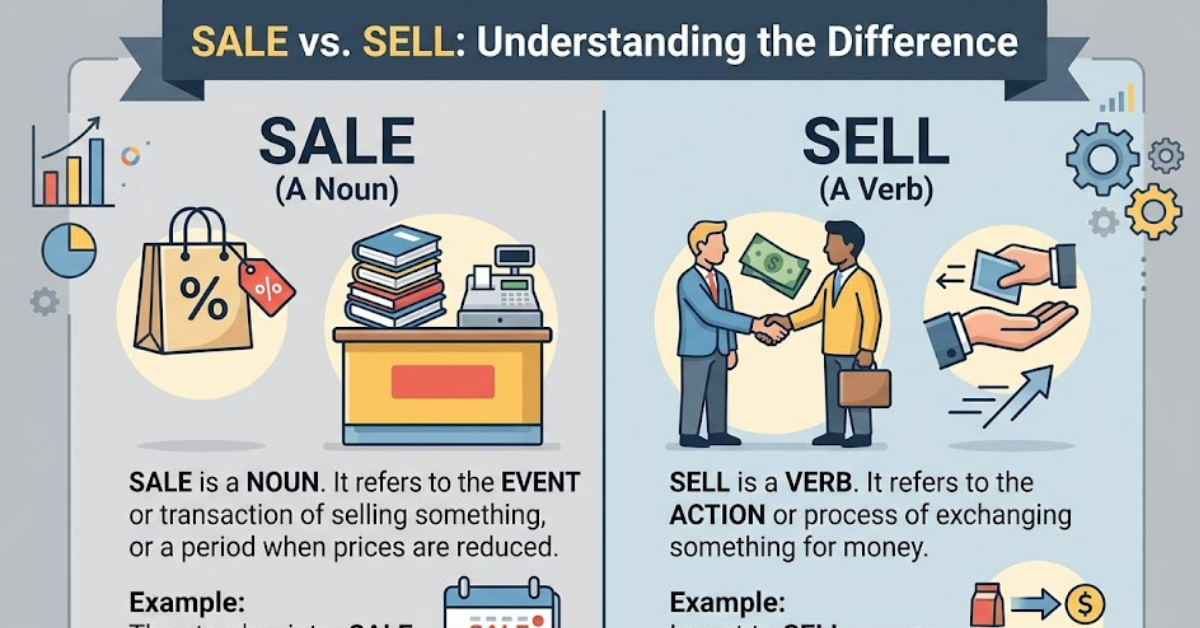
“Sell” is a verb. It means to exchange something for money.
Examples:
- I want to sell my laptop.
- They sell fresh vegetables every morning.
Definition of “Sale”
“Sale” is a noun. It refers to the act of selling or a special shopping event.
Examples:
- The store is having a summer sale.
- The sale starts at 9 AM.
The Main Difference Explained
The easiest way to remember the difference is this:
- Sell = an action
- Sale = a thing, event, or result
Here’s how they work in sentences:
Using “Sell”
- She sells handmade candles online.
- We plan to sell our old furniture.
Using “Sale”
- There is a clearance sale this weekend.
- All shoes are on sale today.
In simple terms, “sell” describes what someone does, while “sale” describes an event or situation.
When Should You Use Each Word?
Understanding the context helps you choose the correct word naturally.
Use “Sell” When:
- Talking about an action
- Describing the exchange of goods for money
- Explaining what a person or business does
Examples:
- He wants to sell his car.
- My cousin sells homemade cakes.
Use “Sale” When:
- Referring to discounts or promotions
- Talking about a shopping event
- Mentioning a completed transaction
Examples:
- The winter sale begins tomorrow.
- Everything in the shop is on sale.
Example Sentences
Here are some simple examples showing how both words are used correctly:
- I will sell my old phone next week.
- The sale ends on Friday.
- They sell books and stationery.
- The furniture sale attracted many customers.
- She plans to sell her apartment.
- We bought these clothes during a holiday sale.
These examples make it easier to see how each word functions differently in English grammar.
“For Sale” vs “Sell”
Many learners also struggle with the phrase “for sale.”
What Does “For Sale” Mean?
“For sale” means something is available to buy.
Example:
- The house is for sale.
What Does “Sell” Mean?
“Sell” describes the act of offering something in exchange for money.
Example:
- I want to sell my house.
So, one phrase describes availability, while the other describes the action itself.
Common Confusion: Sale, Sell, and Sail
These three words are often mixed up because they sound similar.
- Sale = a shopping event or discount
- Sell = exchange something for money
- Sail = travel on water using a boat
Example:
- We will sell the boat during the summer sale and then sail across the lake.
Although they sound alike, their meanings are completely different.
Pronunciation Difference
The pronunciation is slightly different:
- Sale rhymes with “tail”
- Sell rhymes with “bell”
Paying attention to pronunciation can help avoid mistakes during conversations.
Simple Grammar Rule
The grammar rule is very straightforward:
- “Sell” is always a verb.
- “Sale” is always a noun.
A quick memory trick:
- You sell something.
- You have a sale.
This pattern works consistently in English.
Why People Confuse These Words
Online jokes and memes often highlight mistakes like:
- “I will sale my phone.”
- “Big sell today!”
These examples are incorrect in standard English, but they show how commonly people mix up the two words, especially in casual writing and social media posts.
Business and Financial Usage
In retail and finance, these terms can appear in more technical phrases.
Rate of Sale
This term refers to how quickly products are sold over a period of time.
Sell-Through
“Sell-through” measures how much inventory has been sold compared to how much stock was received.
Sell to Cover
In stock trading, “sell to cover” means selling shares to pay costs such as taxes or purchase expenses.
These meanings are more specialized but still follow the same grammatical rules.
Quick Tips for Correct Usage
Here’s an easy guide to remember:
- If the word describes an action, use sell.
- If it describes an event, discount, or result, use sale.
- Use “for sale” when something is available to purchase.
When unsure, ask yourself:
“Is someone doing an action, or is it describing a thing or event?”
Frequently Asked Questions
1. What is the difference between “sale” and “sell”?
“Sell” is a verb, while “sale” is a noun.
2. Can I say “I will sale my car”?
No. The correct sentence is:
- “I will sell my car.”
3. What does “for sale” mean?
It means an item is available for purchase.
4. Is “sale” always related to discounts?
Usually, yes. It often refers to promotional shopping events or reduced prices.
5. Why do learners confuse these words?
Because they look and sound similar and are closely connected in meaning.
Conclusion
Understanding the difference between these two words becomes much easier once you remember one simple rule: “sell” is an action, and “sale” is a noun or event.
Whether you’re writing emails, social media captions, advertisements, or everyday messages, using the correct word will make your English sound clearer and more professional.
Practice with simple examples, and soon choosing between the two will feel completely natural.