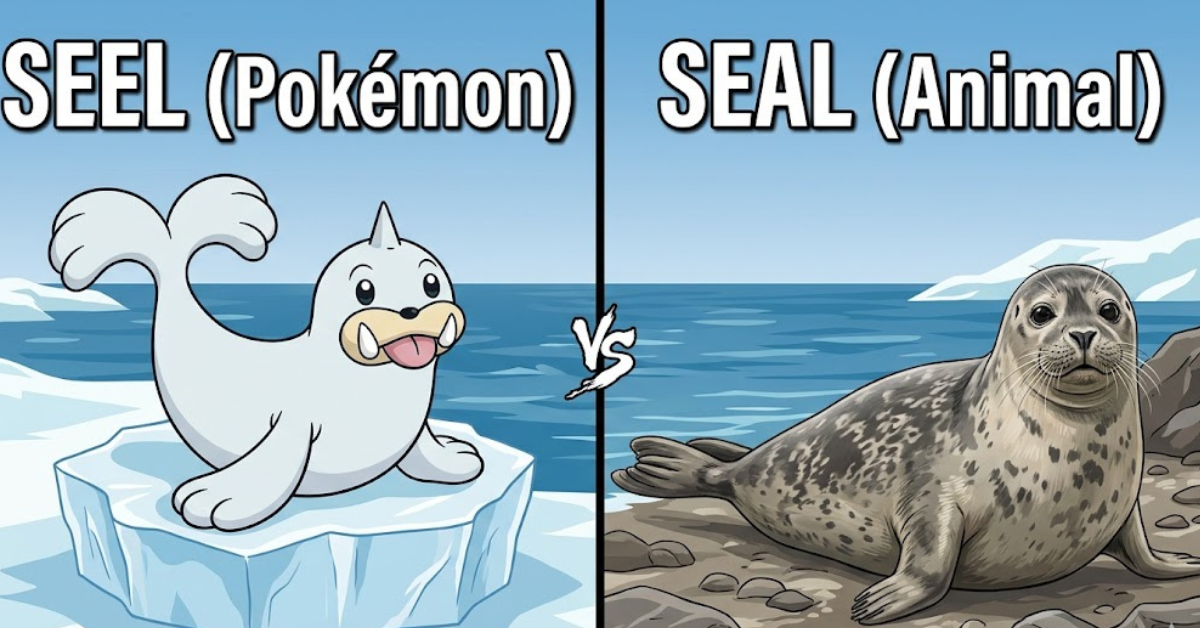

English is full of words that sound alike but carry completely different meanings. One pair that often causes confusion is seel vs seal. At first glance, they look almost identical, but only one is commonly used in modern English.
Understanding the seel vs seal difference can help you avoid spelling mistakes and improve your writing accuracy. Whether you’re writing an email, reading literature, or checking dictionary definitions, knowing which word fits the context matters more than you might think.
In this guide, you’ll learn:
- The meanings of both words
- Why people confuse them
- When to use each term
- Real-life examples
- Common mistakes to avoid
Let’s break it down in simple terms.
Seel vs Seal Meaning
The biggest confusion comes from pronunciation. Both words sound very similar, but their meanings are entirely different.
What Does “Seal” Mean?
“Seal” is a common English word with several meanings depending on the context.
It can be used as:
- A noun
- A verb
Here are the most common uses:
As a Noun
“Seal” can refer to:
- A sea animal
- An official stamp or emblem
- Something that closes tightly
Examples:
- The seal swam near the shore.
- The document carried the king’s seal.
- Check the rubber seal around the door.
As a Verb
“Seal” also means to close something securely.
Examples:
- Please seal the envelope before mailing it.
- Workers sealed the crack in the wall.
This is the version most people use in everyday conversation.
What Does “Seel” Mean?
“Seel” is a very old and uncommon English word. Most modern dictionaries label it as archaic or obsolete.
Historically, “seel” meant:
- To close someone’s eyes
- To blind a falcon temporarily during training
The word appeared mainly in medieval hunting language and old literature.
Example:
- The falconer seels the bird before training.
Today, very few people use this term outside historical writing or literary discussions.
Seel vs Seal Difference Explained
The seel vs seal difference becomes much easier once you understand how modern English treats these words.
Here’s the simple breakdown:
- “Seal” is correct for modern daily use.
- “Seel” is an outdated historical term.
In most situations, if you’re unsure which spelling to choose, “seal” is almost certainly the right option.
Why People Confuse Seel and Seal
Several factors cause this confusion.
Similar Pronunciation
Both words are pronounced almost the same in many accents. That naturally leads people to assume the spellings are interchangeable.
Typing Errors
Sometimes “seel” appears because of:
- Fast typing
- Autocorrect mistakes
- Misspelling
Rare Exposure to “Seel”
Most people encounter “seal” regularly but rarely see “seel.” When they do notice it in old texts, they may assume it’s an alternative spelling rather than a separate word.
How to Use “Seal” Correctly
Because “seal” has multiple meanings, context is important.
Use “Seal” When Talking About Closing Something
Examples:
- Seal the package carefully.
- The jar needs a tight seal.
Use “Seal” for Official Approval
Examples:
- The certificate bears an official seal.
- The king placed his seal on the letter.
Use “Seal” for the Marine Animal
Examples:
- We watched a seal resting on the rocks.
- Baby seals are known as pups.
How to Use “Seel” Correctly
In modern writing, you’ll almost never need “seel.”
The only common situations include:
- Historical fiction
- Medieval studies
- Falconry references
- Literary analysis
Unless you’re discussing ancient terminology, avoid using it in normal communication.
Common Mistakes in Seel vs Seal Usage
Here are mistakes people frequently make.
Incorrect
- Please seel the envelope.
- The food container has a broken seel.
Correct
- Please seal the envelope.
- The food container has a broken seal.
A good rule is simple:
If the sentence relates to closing, securing, approving, or animals, use “seal.”
Memory Trick to Remember the Difference
A quick memory tip can help you avoid confusion.
Think of “Seal” as Secure
Both words start with “S.”
- Seal = Secure
- Seal = Shut tightly
That association makes it easier to remember the correct spelling.
Is “Seel” a Real Word?
Yes, it is technically a real English word. However, it’s considered archaic and rarely appears in modern dictionaries except as a historical reference.
That’s why spellcheck tools often flag it as an error.
Examples of Seel vs Seal in Sentences
Seeing both words in context makes the distinction clearer.
Seal Examples
- She used wax to seal the letter.
- The seal balanced a ball on its nose.
- Inspect the seal around the window.
Seel Examples
- Ancient falconers would seel birds during training.
- The poet used the word “seel” in an old manuscript.
Notice how unusual “seel” sounds in modern English.
Should You Ever Use “Seel”?
For most writers, the answer is no.
Avoid it unless:
- You’re quoting historical material
- Writing period fiction
- Discussing old English vocabulary
Using “seal” will almost always be the correct choice in business, academic, and casual writing.
Why Correct Word Choice Matters
Small spelling differences can change meaning completely.
Using the wrong word may:
- Confuse readers
- Hurt credibility
- Make writing look unprofessional
Understanding subtle distinctions like these helps improve both written and spoken English.
FAQs
Is “seel” a misspelling of “seal”?
Not exactly. “Seel” is an actual but outdated English word. However, many people accidentally type it when they mean “seal.”
Which word should I use in modern English?
You should almost always use “seal” in modern communication.
What does “seel” mean in old English?
Historically, it referred to closing or sewing shut the eyes of a bird used in falconry.
Are “seel” and “seal” pronounced the same?
In many accents, yes. That’s one reason people confuse them.
Can I use “seel” in professional writing?
Only if you’re discussing historical language or literature. Otherwise, it’s best avoided.
Why does spellcheck mark “seel” as incorrect?
Because the word is extremely rare and obsolete in modern usage.
Conclusion
The confusion around seel vs seal mainly comes from their similar pronunciation. Still, their meanings and usage are very different.
To summarize:
- “Seal” is the modern, commonly used word.
- “Seel” is an old-fashioned term rarely used today.
If you’re writing about closing something, official stamps, or marine animals, “seal” is the correct spelling nearly every time.
Understanding the seel vs seal meaning and recognizing the seel vs seal difference will make your writing clearer, more accurate, and more professional. If you enjoy learning about confusing English words, explore other commonly mixed-up terms to sharpen your grammar skills even further.