
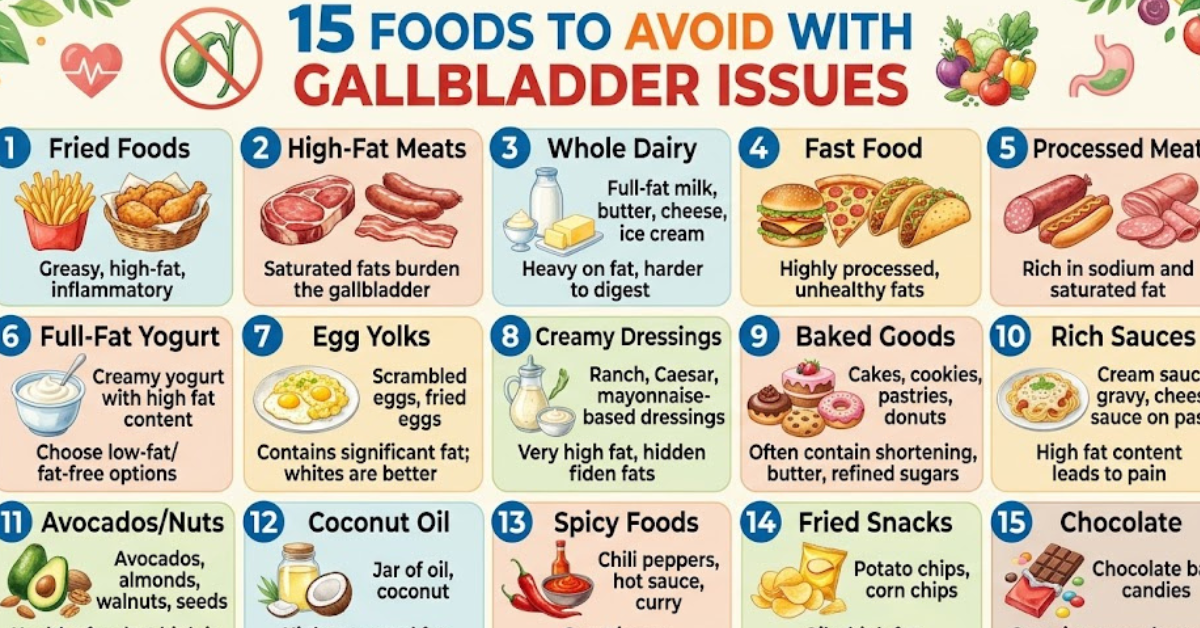

If you’ve been dealing with pain, bloating, or nausea after meals, your gallbladder might be struggling to keep up. Understanding the 15 foods to avoid with gallbladder issues can make a huge difference in managing symptoms and preventing flare-ups.
The gallbladder plays a key role in digesting fats by releasing bile. When it isn’t functioning properly—due to gallstones, inflammation, or sluggish bile flow—certain foods can make symptoms worse. In this guide, we’ll break down the worst food triggers and explain why they can cause discomfort.
Why Diet Matters in Gallbladder Problems
Your diet directly affects how hard your gallbladder has to work. High-fat or heavily processed foods force it to release more bile, which can trigger pain if there’s a blockage or inflammation.
Common gallbladder-related symptoms worsened by diet include:
- Upper right abdominal pain
- Nausea or vomiting
- Bloating and gas
- Indigestion after fatty meals
Choosing the right foods—and avoiding the wrong ones—can significantly reduce these symptoms.
15 Foods to Avoid with Gallbladder Issues
Here’s a detailed breakdown of the 15 foods to avoid with gallbladder issues and why they can be problematic.
1. Fried Foods
French fries, fried chicken, and pakoras are loaded with unhealthy fats that overload bile production and trigger pain.
2. Fast Food Meals
Burgers, pizza, and fried wraps combine high fat, refined carbs, and processed ingredients—triple trouble for the gallbladder.
3. Full-Fat Dairy Products
Whole milk, cheese, and cream are high in saturated fat, which can worsen gallbladder symptoms.
4. Fatty Red Meat
Beef, lamb, and processed sausages are difficult to digest and can cause bile buildup and discomfort.
5. Butter and Ghee (in excess)
While traditional, heavy use of butter or ghee can strain digestion when gallbladder issues are present.
6. Processed Meats
Bacon, hot dogs, and salami contain saturated fats and additives that can irritate the digestive system.
7. Creamy Desserts
Ice cream, custards, and cheesecake are high in fat and sugar, making them double triggers.
8. Egg Yolks (in large amounts)
Egg yolks are rich in cholesterol, which may contribute to gallstone formation in sensitive individuals.
9. Coconut Oil (excessive use)
Although sometimes marketed as healthy, coconut oil is high in saturated fat and should be limited.
10. Baked Goods with Trans Fats
Pastries, doughnuts, and packaged cakes often contain hydrogenated oils that worsen inflammation.
11. Spicy Fast Foods
Spicy fried snacks can irritate the digestive tract and intensify nausea in some people.
12. Chocolate (high-fat varieties)
Milk chocolate and chocolate desserts are high in fat and sugar, which can slow digestion.
13. Nuts in Large Quantities
While healthy in moderation, large servings of nuts are high in fat and may trigger symptoms.
14. Sugary Soft Drinks
Sodas and sweetened beverages can contribute to inflammation and digestive imbalance.
15. Alcohol
Alcohol puts stress on the liver and gallbladder, interfering with bile production and flow.
Better Food Choices for Gallbladder Health
Instead of the above, focus on:
- Lean proteins (chicken breast, fish)
- Fresh fruits and vegetables
- Whole grains like oats and brown rice
- Low-fat dairy or plant-based alternatives
- Healthy cooking methods like steaming and boiling
FAQs About Gallbladder Diet
1. What foods trigger gallbladder attacks most?
Fried, fatty, and processed foods are the most common triggers for gallbladder pain and attacks.
2. Can I eat eggs with gallbladder problems?
Yes, but limit egg yolks. Egg whites are generally safer and easier to digest.
3. Is a low-fat diet necessary for gallbladder issues?
Yes, a low-fat diet helps reduce strain on the gallbladder and minimizes symptoms.
4. Are bananas good for gallbladder health?
Yes, bananas are low in fat and gentle on digestion, making them a safe choice.
5. Can drinking water help gallbladder problems?
Staying hydrated supports digestion and bile flow, which may help reduce discomfort.
Conclusion
Managing your diet is one of the most effective ways to control symptoms linked to gallbladder problems. By avoiding these 15 foods to avoid with gallbladder issues, you can reduce pain, improve digestion, and support overall gallbladder health.
Small dietary changes can make a big difference over time. Focus on lighter, low-fat meals and listen to how your body responds. If symptoms persist, consulting a healthcare professional is always the safest next step.