
Losing the mucus plug is one of those pregnancy moments that can feel a little confusing—and sometimes even alarming. If you’ve noticed this change, you’re probably wondering about the things to avoid after losing mucus plug and what it actually means for your body and your baby.
In simple terms, the mucus plug is a thick barrier that seals the cervix during pregnancy, helping protect the uterus from infection. When it comes out, it can be a sign that your body is preparing for labor—but timing varies widely. It could still be days or even weeks before delivery.
This guide breaks down exactly what to avoid, what’s normal, and when you should contact your healthcare provider.
What Does Losing the Mucus Plug Mean?
Before jumping into the things to avoid after losing mucus plug, it helps to understand what’s happening.
The mucus plug may come out:
- In one thick piece or small discharge over time
- With clear, white, pink, or slightly blood-tinged mucus
- Pain-free in most cases
It often signals that the cervix is softening or beginning to dilate. However, it is not a guaranteed sign that labor has started immediately.
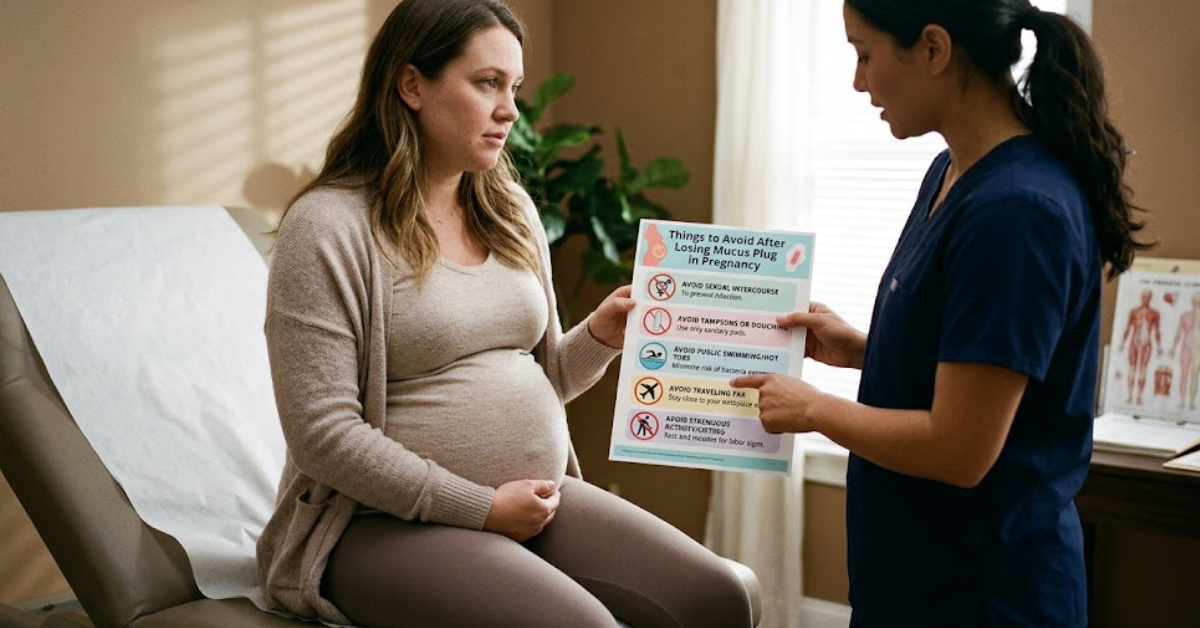
Things to Avoid After Losing Mucus Plug
Once you notice the mucus plug has come out, your focus should be on protecting yourself from infection, avoiding unnecessary stress, and monitoring your body closely.
1. Avoid Unprotected Intercourse (If Advised by Doctor)
One of the most important things to avoid after losing mucus plug is unprotected sex—especially if your provider has given you restrictions.
Why?
- The cervix is more open
- Higher risk of infection
- Semen can stimulate uterine activity in some cases
Always follow your doctor’s personalized advice, as recommendations can vary.
2. Avoid Inserting Anything into the Vagina
After losing the mucus plug, the cervix is less protected.
Avoid:
- Tampons
- Douching
- Internal menstrual cups (unless specifically cleared)
This helps reduce the risk of introducing bacteria into the uterus.
3. Avoid Swimming in Pools, Hot Tubs, or Unclean Water
Another key item on the list of things to avoid after losing mucus plug is exposure to potentially contaminated water.
Why it matters:
- The cervical barrier is weakened
- Infection risk increases
- Hot tubs can also raise body temperature too much in late pregnancy
4. Avoid Ignoring Early Labor Signs
Don’t brush off symptoms like:
- Regular contractions
- Lower back pain that intensifies
- Water breaking (fluid leakage)
- Pelvic pressure increasing
Even though losing the mucus plug doesn’t always mean labor is immediate, these signs should be taken seriously.
5. Avoid Long-Distance Travel Late Pregnancy
If you’re close to your due date, traveling far from medical care is not ideal.
Risks include:
- Unexpected labor onset
- Limited access to emergency care
- Discomfort and dehydration
Short, essential trips may still be okay—ask your provider first.
6. Avoid Heavy Physical Strain
Now is not the time for intense physical activity.
Try to avoid:
- Heavy lifting
- Strenuous workouts
- Excessive standing or fatigue
Gentle movement like walking is usually fine unless your doctor advises otherwise.
7. Avoid Panic or Over-Checking Symptoms
Losing the mucus plug can feel dramatic, but it’s often just one step in a gradual process.
Try not to:
- Constantly check for more discharge
- Assume labor is immediate
- Stress excessively over normal changes
Instead, focus on monitoring contractions and overall wellbeing.
When to Call a Doctor
Contact your healthcare provider if you notice:
- Bright red bleeding (more than spotting)
- Fluid leaking (possible water breaking)
- Strong, regular contractions
- Decreased baby movement
- Signs of infection fever, foul odor discharge
FAQs About Things to Avoid After Losing Mucus Plug
1. Does losing the mucus plug mean labor is starting?
Not always. It can happen days or even weeks before labor begins.
2. Can I shower after losing my mucus plug?
Yes, regular showers are safe. Just avoid baths if your doctor advises against it.
3. Should I go to the hospital immediately?
Only if you have contractions, water breaking, heavy bleeding, or your doctor has told you to come in.
4. Is it safe to walk after losing the mucus plug?
Yes, light walking is generally safe unless you’ve been given restrictions.
5. Can the mucus plug regenerate?
Yes, it can partially reform if labor doesn’t start immediately.
Conclusion
Understanding the things to avoid after losing mucus plug can help you stay calm and make safer choices as your body prepares for labor. While this stage can feel like a big signal, it’s often just the beginning of your body’s natural progression toward childbirth.
The key is simple: avoid infection risks, listen to your body, and stay in close contact with your healthcare provider. If anything feels unusual, don’t hesitate to get checked.
For more pregnancy guidance, you may want to explore topics like early labor signs, cervical dilation, or what happens after water breaking.