
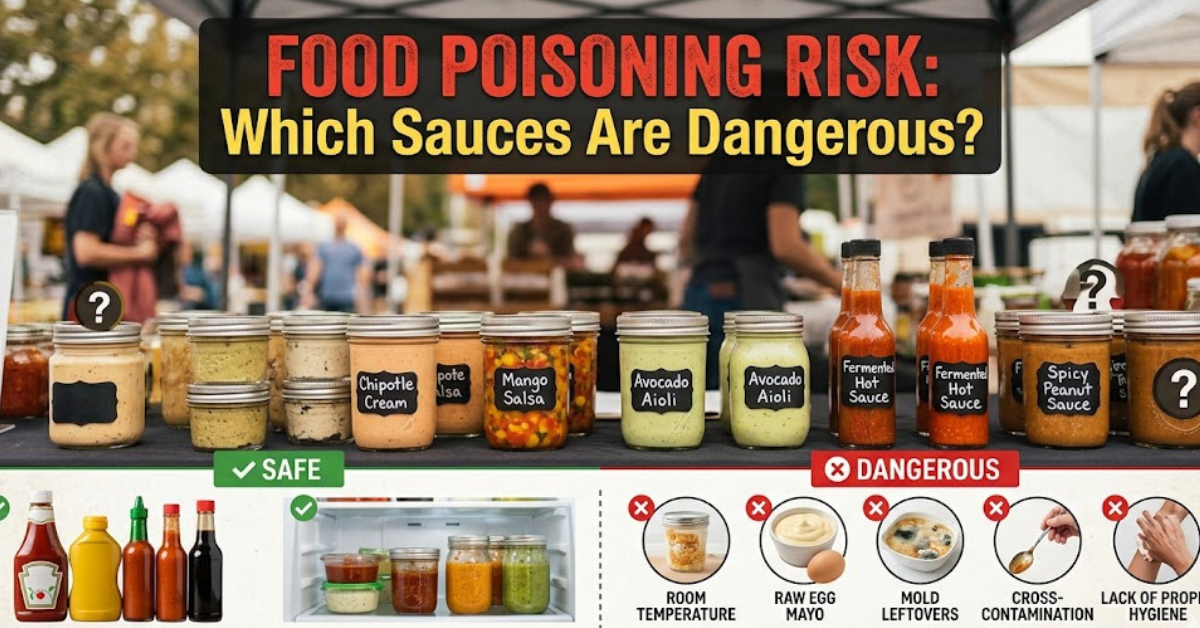

If you’ve ever wondered which one of the following sauces is a risk for food poisoning?, you’re asking a very important food safety question. Sauces may look harmless, but some of them are actually high-risk when it comes to bacterial growth and contamination—especially if they’re not stored or prepared correctly.
Understanding the risks behind certain sauces can help you avoid foodborne illnesses like Salmonella or E. coli. Let’s break it down in a simple, practical way.
Which One of the Following Sauces Is a Risk for Food Poisoning?
The answer usually depends on the ingredients and how the sauce is prepared. However, the most common sauces linked to food poisoning risk are those made with:
- Raw or lightly cooked eggs
- Dairy products (cream, milk, butter)
- Improper refrigeration
- Homemade preparation without preservatives
In most cases, mayonnaise-based sauces, hollandaise sauce, and creamy dressings are the top culprits.
So, when asking which one of the following sauces is a risk for food poisoning?, the safest general answer is:
Any sauce made with raw eggs or dairy and left unrefrigerated is high risk.
High-Risk Sauces That Can Cause Food Poisoning
Mayonnaise-Based Sauces (Homemade Mayo, Aioli, Remoulade)
Traditional mayonnaise and similar sauces often contain raw egg yolks. If not pasteurized or properly refrigerated, they can become a breeding ground for bacteria.
Risk factors:
- Raw eggs
- Warm storage conditions
- Homemade preparation without preservatives
Hollandaise Sauce
Hollandaise is a classic example of a high-risk sauce. It’s made with egg yolks and butter and is typically served warm—not hot enough to kill bacteria.
Why it’s risky:
- Low cooking temperature
- Egg yolk base
- Short shelf life
Cream-Based Sauces (Alfredo, White Sauce, Cheese Sauces)
Dairy-heavy sauces spoil quickly if left out too long. Bacteria grow rapidly in warm environments.
Common risks:
- Milk and cream base
- Temperature abuse (left out after cooking)
- Improper reheating
Salad Dressings with Eggs or Dairy
Some ranch, Caesar, and blue cheese dressings contain perishable ingredients.
Watch out for:
- Homemade versions
- Dressings left unrefrigerated at buffets
- Expired bottled dressings
Why These Sauces Are a Food Poisoning Risk
The main reason these sauces are risky comes down to microbiology.
1. Temperature Danger Zone
Bacteria grow rapidly between 5°C and 60°C (41°F–140°F). Many sauces are left in this range too long.
2. Raw or Lightly Cooked Eggs
Eggs can carry Salmonella, which survives if not fully cooked.
3. Dairy Spoilage
Milk and cream provide an ideal environment for bacterial growth when not chilled.
4. Cross-Contamination
Using dirty utensils or mixing raw and cooked foods increases contamination risk.
How to Store Sauces Safely
To reduce the risk when asking which one of the following sauces is a risk for food poisoning?, storage is key.
Safe Handling Tips:
- Refrigerate sauces within 2 hours of preparation
- Keep fridge temperature below 4°C (40°F)
- Avoid leaving creamy sauces at room temperature
- Use pasteurized eggs for homemade recipes
- Label homemade sauces with dates
Signs a Sauce Has Gone Bad
Before using any sauce, check for:
- Sour or off smell
- Change in color or texture
- Separation or curdling
- Mold growth
- Bitter or unusual taste
If you notice any of these, discard it immediately.
FAQs About Sauce Safety and Food Poisoning
1. Which sauce is most likely to cause food poisoning?
Mayonnaise-based sauces and hollandaise are among the most common due to raw eggs and poor temperature stability.
2. Is store-bought mayonnaise safe?
Yes, most commercial mayonnaise uses pasteurized eggs and preservatives, making it much safer than homemade versions.
3. Can creamy sauces be left out overnight?
No. Cream-based sauces should be refrigerated within 2 hours to prevent bacterial growth.
4. Why do egg-based sauces spoil quickly?
Eggs provide nutrients that bacteria like Salmonella need to grow rapidly if not properly handled.
5. How can I reduce risk when eating sauces at restaurants?
Choose freshly made sauces, avoid buffets where food sits out long, and ensure hot sauces are served hot.
Conclusion
So, when answering which one of the following sauces is a risk for food poisoning?, the clear takeaway is that egg-based and dairy-based sauces are the most vulnerable. Mayonnaise, hollandaise, and cream sauces require careful handling, proper refrigeration, and safe preparation methods.
By understanding how these sauces behave and storing them correctly, you can significantly reduce your risk of foodborne illness while still enjoying your favorite dishes.