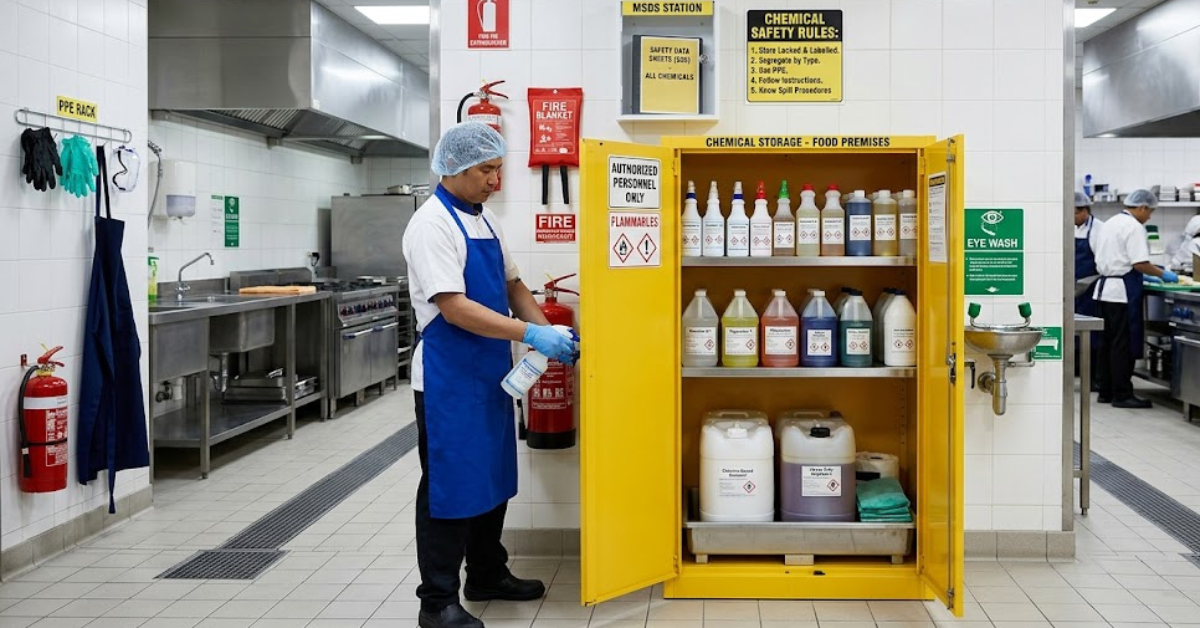

Knowing how should chemicals be stored in food premises? is essential for protecting food safety, staff health, and legal compliance. Even a small mistake in chemical storage can lead to contamination, food poisoning risks, or serious regulatory penalties.
In any kitchen, restaurant, or food production area, chemicals like cleaning agents, disinfectants, pest control products, and sanitizers are necessary—but they must be handled with extreme care. The focus keyword how should chemicals be stored in food premises? connects directly to food hygiene standards used worldwide, including HACCP and local food safety regulations.
This guide breaks down clear, practical steps for safe chemical storage in food environments so you can maintain a clean, compliant, and hazard-free workspace.
Why Proper Chemical Storage in Food Premises Matters
Improper storage of chemicals in food areas can cause:
- Cross-contamination of food products
- Harmful chemical ingestion risks
- Accidental poisoning of staff or customers
- Violations of food safety laws
- Closure of business due to non-compliance
Food premises must treat chemicals as high-risk materials, separate from anything edible or drinkable.
How Should Chemicals Be Stored in Food Premises? Core Guidelines
When asking how should chemicals be stored in food premises?, the answer always comes down to one principle: complete separation from food and controlled access.
1. Store Chemicals in a Dedicated Area
Chemicals should always be kept in a designated storage space, away from food preparation zones.
Best practices include:
- Separate locked cupboard or room
- Clearly labeled “Chemical Storage Only” area
- Ventilated and dry environment
- Restricted access for trained staff only
Never store chemicals on shelves above food or near ingredients.
2. Use Original and Clearly Labeled Containers
One of the biggest risks in food premises is transferring chemicals into unmarked bottles.
To stay safe:
- Keep chemicals in original packaging whenever possible
- Ensure labels are readable and intact
- Never use food containers for chemicals
- Include hazard symbols and instructions
This reduces the risk of confusion and accidental misuse.
3. Keep Chemicals Away from Food and Equipment
A golden rule in food safety: chemicals should never share space with food items or utensils.
Avoid storing chemicals:
- On food preparation counters
- Inside refrigerators used for food
- Near dry ingredients or spices
- Beside cooking equipment
Even sealed containers can leak or emit fumes that contaminate food.
4. Apply the “Low-Level Storage Rule”
To reduce accidental spills or contamination:
- Store heavy chemicals on lower shelves
- Keep liquids in spill-proof containers
- Avoid overhead storage of hazardous substances
This prevents chemicals from falling onto food or work surfaces.
Safe Storage Conditions for Food Premises Chemicals
Proper environmental conditions are just as important as location.
Temperature and Ventilation Control
Chemicals should be stored in:
- Cool environments (avoid heat exposure)
- Well-ventilated rooms to reduce fumes
- Areas away from direct sunlight
Heat can cause chemical reactions or container expansion, increasing risk.
Secure and Controlled Access
Only trained staff should access chemical storage areas.
Recommended controls:
- Locked cabinets or rooms
- Staff training on chemical handling
- Access logs for high-risk chemicals
This reduces misuse and accidental exposure.
Labeling and Safety Data Sheets SDS
Every food premises must maintain clear chemical documentation.
What to include:
- Product name and concentration
- Hazard warnings and symbols
- Manufacturer instructions
- Safety Data Sheets (SDS) readily available
SDS documents provide emergency instructions in case of spills or exposure.
Common Mistakes in Chemical Storage
Even well-managed kitchens can make mistakes. Watch out for:
- Storing cleaning sprays above food shelves
- Mixing chemicals in unmarked bottles
- Leaving chemicals open after use
- Keeping expired products
- Ignoring ventilation requirements
Avoiding these errors is key to maintaining compliance and safety.
Staff Training and Hygiene Practices
Proper storage is only effective when staff understand it.
Training should cover:
- Identifying hazardous chemicals
- Correct storage procedures
- Spill response steps
- Personal protective equipment (PPE) usage
- Food contamination prevention
Regular refresher training helps maintain high safety standards.
Emergency Procedures for Chemical Spills
Food premises should always be prepared for accidents.
Basic response steps include:
- Evacuate food from affected area
- Wear protective gloves and gear
- Contain spill using absorbent materials
- Ventilate the space
- Dispose of contaminated materials safely
Having spill kits readily available is highly recommended.
FAQs: Chemical Storage in Food Premises
1. Why is chemical storage important in food premises?
It prevents food contamination, protects staff safety, and ensures compliance with food hygiene laws.
2. Can chemicals be stored near food if they are sealed?
No. Even sealed chemicals can leak fumes or cause contamination risks.
3. What is the best place to store cleaning chemicals in a kitchen?
A locked, ventilated, and clearly labeled chemical storage cabinet away from food areas.
4. Should chemicals be labeled in food premises?
Yes, all chemicals must be clearly labeled with names, hazards, and instructions.
5. Who should access chemical storage areas?
Only trained and authorized staff members should have access.
Conclusion
Understanding how should chemicals be stored in food premises? is a core part of food safety management. The key principles are simple: separation, labeling, secure storage, and staff awareness.
By keeping chemicals away from food, using proper containers, and following safety guidelines, food businesses can significantly reduce risks and maintain hygiene standards.
If you’re managing a food business, now is the right time to review your chemical storage setup and ensure it meets safety regulations.