
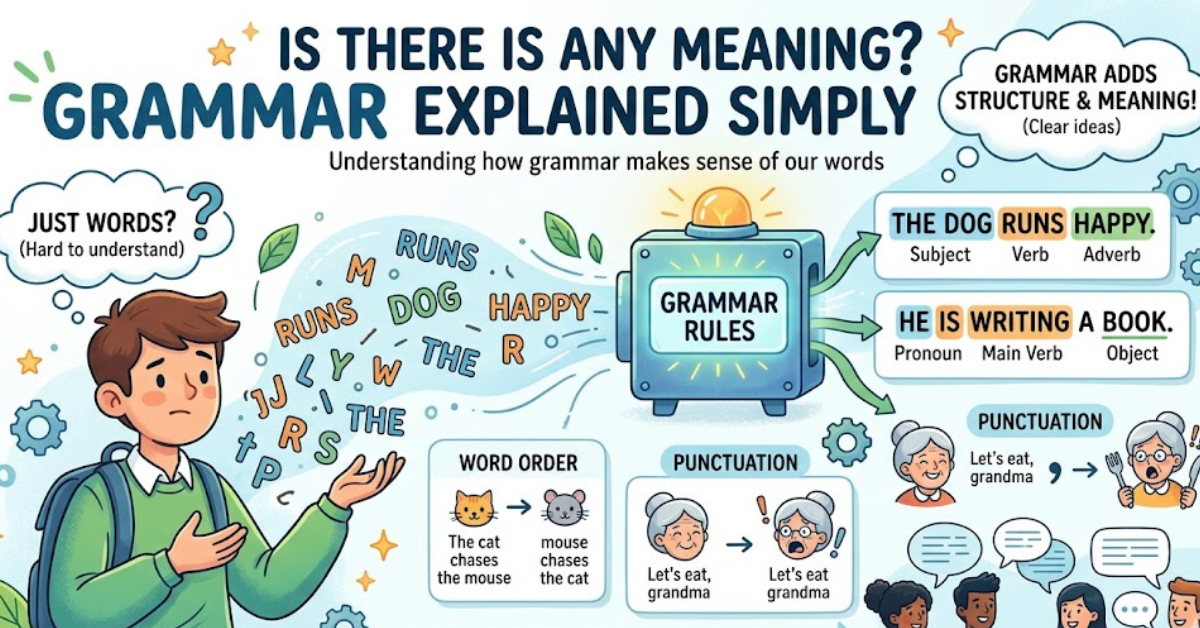

If you’ve ever typed “is there is any” and felt unsure, you’re not alone. This phrase is a very common English mistake, especially among learners trying to form questions. The confusion usually comes from mixing two correct structures: “there is” and “is there.”
The focus of this guide is to help you understand why this phrase is incorrect and what you should use instead in real-life English conversations.
Why “Is Their Is Any” Is Incorrect
The phrase is grammatically wrong because it repeats the verb “is” twice in the same structure.
English only needs one auxiliary verb in a question like this.
Incorrect:
- Is their is any milk left?
- Is their is any problem?
Correct:
- Is their any milk left?
- Is their any problem?
The extra “is” breaks the natural grammar structure of English questions.
Correct Structure You Should Use
The correct pattern is:
Is there + any + noun?
This structure is used when asking about existence or availability.
Examples:
- Is their any water in the bottle?
- Is their any chance of rain today?
- Is there any message for me?
- Is there any food left?
This is the natural and standard way native speakers form such questions.
Why Learners Make This Mistake
This error usually happens because of confusion between two sentence types:
1. Statement form
- There is a problem.
2. Question form
- Is there a problem?
Learners sometimes combine both unintentionally, creating an incorrect hybrid structure.
How to Use “Is There Any” Correctly
To avoid mistakes, follow these simple rules:
- Use “is their” for questions
- Use “their is” for statements
- Use “any” in questions or negatives
More correct examples:
- Is their any sugar left?
- Is their any reason for this delay?
- Is their any hope for improvement?
Simple Grammar Trick
If you ever write the incorrect form, just remember:
Only one “is” is needed in the sentence.
So instead of doubling it, remove the extra verb and restructure the sentence.
FAQs
1. Is “is their is any” ever correct?
No, it is always grammatically incorrect in standard English.
2. What is the correct alternative?
The correct form is “is their any” followed by a noun.
3. Why does this mistake happen so often?
It comes from mixing two correct patterns: “there is” and “is there.”
4. Can I use “any” in positive sentences?
Yes, but it is less common. Example: You can take any book you like.
5. Is “is their any” formal English?
Yes, it is neutral and works in both formal and informal situations.
Conclusion
The phrase “is there is any” is a common grammar mistake, but the correct structure is simple once you understand it. Always use “is there any” when asking about the existence or availability of something.
Mastering this small rule helps your English sound more natural, fluent, and grammatically correct in both writing and speaking.
If you want to improve further, practice forming your own questions using the correct structure and pay attention to how native speakers use it in everyday conversation