
If you’ve ever driven through the countryside and wondered what is the maximum speed limit on a road outside a built-up area unless otherwise signed, you’re not alone. It’s one of the most common driving questions in the UK, especially for new drivers or visitors unfamiliar with rural roads.
The short answer is: it depends on the type of road and vehicle, and it’s governed by the UK’s national speed limits. These apply automatically unless a different speed limit is clearly posted.
Let’s break it down in a clear, practical way so you always know what speed is safe and legal.
Understanding Speed Limits Outside Built-Up Areas UK Rules
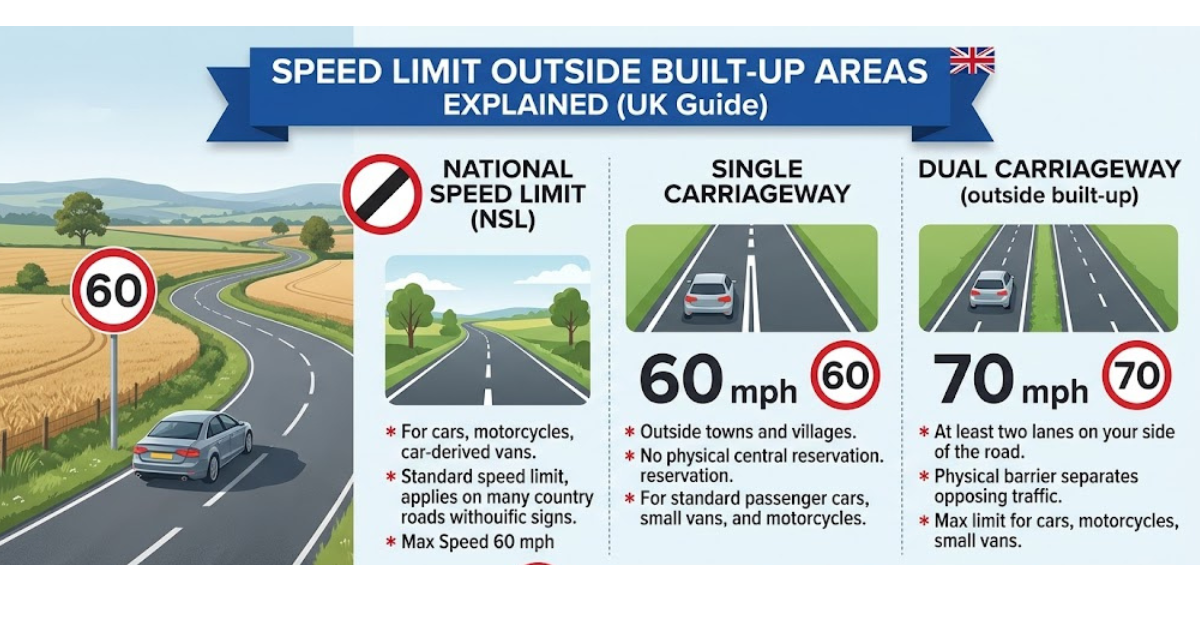
Outside built-up areas (typically rural roads, country lanes, and highways), the default limits are known as national speed limits. These apply when there are no speed limit signs present.
So when asking what is the maximum speed limit on a road outside a built-up area unless otherwise signed, the answer usually refers to these default limits.
National Speed Limits for Cars and Motorcycles
For standard cars and motorcycles:
- Single carriageway roads: 60 mph (96 km/h)
- Dual carriageways: 70 mph (112 km/h)
- Motorways: 70 mph (112 km/h)
These limits apply unless a lower speed is posted.
What Counts as a “Built-Up Area”?
A built-up area is usually defined as a road with street lighting placed less than 200 yards (183 meters) apart.
Once you leave these areas, you enter roads where national speed limits apply.
Common signs of leaving a built-up area:
- “End of town” or village sign
- Streetlights becoming sparse or disappearing
- Open countryside roads or farmland surroundings
Types of Roads Outside Built-Up Areas
Understanding road types helps answer what is the maximum speed limit on a road outside a built-up area unless otherwise signed more accurately.
Single Carriageway Roads
These are roads with one lane in each direction, often found in rural areas.
- Maximum speed: 60 mph
- Common hazards: bends, tractors, narrow lanes
Dual Carriageway Roads
These roads have a central reservation separating directions of traffic.
- Maximum speed: 70 mph
- Generally safer for higher speeds due to separation
Rural Country Roads
These may still be single carriageways but are often narrower and less predictable.
Even though the legal limit may be 60 mph, driving at that speed is often unsafe due to:
- Sharp bends
- Hidden entrances
- Pedestrians, cyclists, and animals
Vehicle-Specific Speed Limits You Should Know
The national speed limit is not the same for all vehicles.
Lower speed limits apply to:
- Cars towing caravans or trailers: 60 mph on motorways, 50 mph on single carriageways
- Goods vehicles over 7.5 tonnes: lower limits apply
- Buses and coaches: also subject to reduced limits
Always check signage and vehicle rules before assuming the limit.
Why Speed Limits Change Without Warning Signs
The phrase “unless otherwise signed” is important because speed limits can change instantly due to:
- Road safety concerns
- Sharp bends or accident history
- Nearby schools or villages
- Roadworks or temporary restrictions
That’s why relying only on the national speed limit can be risky.
Key Rules to Remember
Here’s a quick summary to keep things simple:
- Outside built-up areas = national speed limits apply
- No signs = default UK limits (60 mph single, 70 mph dual/motorway)
- “Unless otherwise signed” = always obey posted speed signs first
- Road conditions matter more than the legal maximum
FAQs About Speed Limits Outside Built-Up Areas
1. What is the maximum speed limit on a road outside a built-up area unless otherwise signed?
For cars, it is 60 mph on single carriageways and 70 mph on dual carriageways or motorways, unless signs indicate otherwise.
2. What does “national speed limit” mean?
It refers to the default speed limits that apply when no specific speed limit signs are present.
3. Can I always drive at 60 mph on rural roads?
Not always. Even if it’s legal, road conditions may make it unsafe.
4. How do I know if I’ve left a built-up area?
Look for the end of village/town signs and fewer streetlights.
5. Do speed limits change for different vehicles?
Yes, larger or towing vehicles often have lower maximum limits.
Conclusion
To sum it up, the answer to what is the maximum speed limit on a road outside a built-up area unless otherwise signed comes down to UK national speed limits: 60 mph on single carriageways and 70 mph on dual carriageways for most cars.
However, the key takeaway is that speed limits are not just about legality—they’re about safety. Road conditions, visibility, and traffic always matter more than the maximum allowed speed.
If you’re interested in safer driving habits or UK road rules, exploring related topics like motorway speed regulations and rural driving safety can help you become a more confident driver.