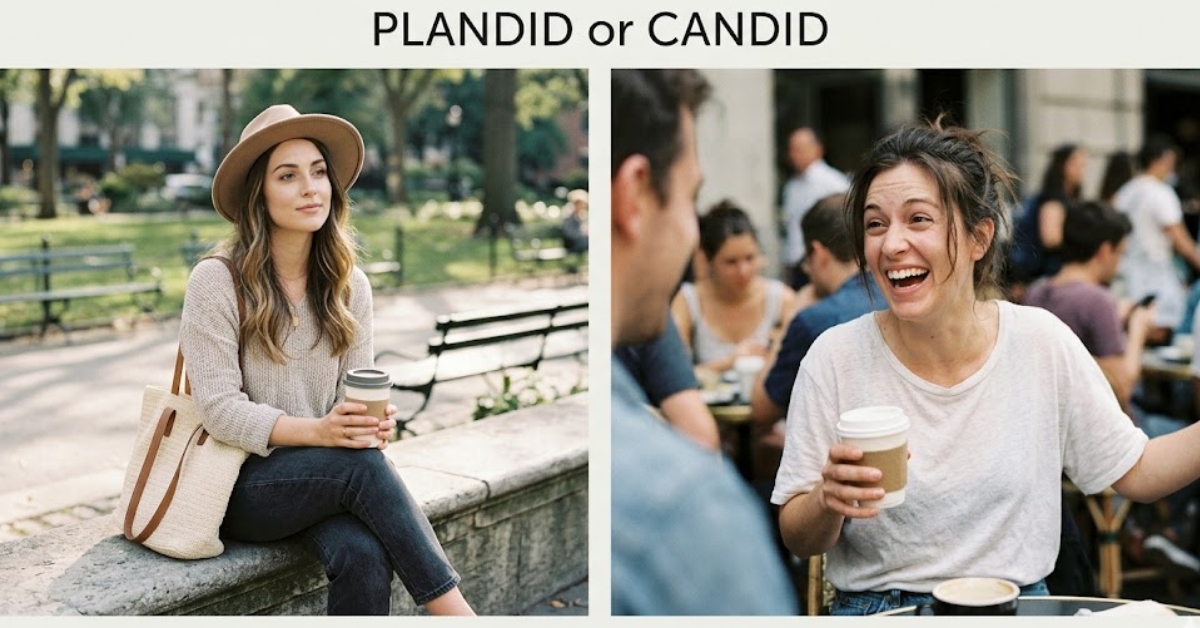

The terms plandid and candid have become popular on social media, especially among Instagram users and content creators. While they may sound similar, they actually describe two very different photography styles.
If you’ve seen these words online and wondered what they mean, you’re not alone. They are often used to explain whether a photo is naturally captured or carefully staged to look natural.
What Do Plandid and Candid Mean?
Both words are connected to photography style, but they describe opposite approaches.
- Candid refers to photos taken naturally without posing or preparation.
- Plandid refers to planned or staged photos that are designed to look natural.
In simple terms:
- Candid = real, unplanned moment
- Plandid = planned photo that looks unplanned
Simple Explanation
People often search for a simple explanation because the difference can be confusing.
Here’s an easy way to understand it:
- A candid photo captures life as it happens
- A plandid photo is carefully set up to appear spontaneous
Think of it like this:
- candid = natural moment caught on camera
- plandid = “natural-looking” but intentionally created
Key Difference Between the Two
The main difference is intention.
Candid Photos
- taken spontaneously
- no posing or direction
- natural expressions
- real-life moments
Plandid Photos
- planned in advance
- styled and composed
- controlled lighting and angles
- designed for aesthetic appeal
Both can look similar, but the process behind them is very different.
Social Media Usage
On platforms like Instagram, TikTok, and Snapchat, both terms are widely used to describe photo styles.
For example:
- “This looks candid” → the photo feels natural
- “This is a plandid shot” → the photo was carefully arranged
Influencers often prefer planned-but-natural-looking photos because they allow better control over appearance while still looking effortless.
Dating Apps and Online Profiles
On apps like Hinge, these terms sometimes appear in captions or profile descriptions.
- Candid photos are used to show authenticity
- Plandid photos are used to highlight presentation and style
People use them to express how they present themselves visually online.
Is “Plandid” a Real Word?
Unlike “candid,” which is a real dictionary word, “plandid” is internet slang.
It is:
- not officially recognized in dictionaries
- created through social media usage
- commonly used in influencer culture
Why Plandid Photos Became Popular
This trend grew because of social media aesthetics.
Main reasons include:
- rise of Instagram photography culture
- desire for “effortless” looking images
- use of filters and editing tools
- influencer marketing and branding
People wanted photos that look natural but still visually perfect.
How People Use These Terms
These words are often used in casual conversation online, such as:
- “That’s such a candid moment”
- “This feels very plandid”
- “Perfect natural-looking shot”
They help describe how real or staged a photo appears.
Real-Life Examples
Candid Moments
- laughing without posing
- spontaneous street photos
- natural expressions caught in action
Plandid Moments
- posing while pretending not to pose
- carefully arranged background
- staged “casual” photography
Common Confusion
People often mix up the two because:
- both can look visually similar
- editing tools blur the difference
- social media encourages aesthetic perfection
- influencers blend natural and staged styles
Simple One-Line Definition
- Candid = natural and unplanned photography
- Plandid = planned photography designed to look natural
Conclusion
The difference between candid and plandid photography reflects how social media has changed the way we capture and present images. One focuses on real, spontaneous moments, while the other is carefully designed to look effortless.
Understanding this helps you better interpret online photos and improve your own photography style. Whether you prefer authentic candid shots or aesthetic planned setups, both styles play an important role in modern visual storytelling.
At the end of the day, it’s not about choosing one over the other—it’s about how you want to present your moments.