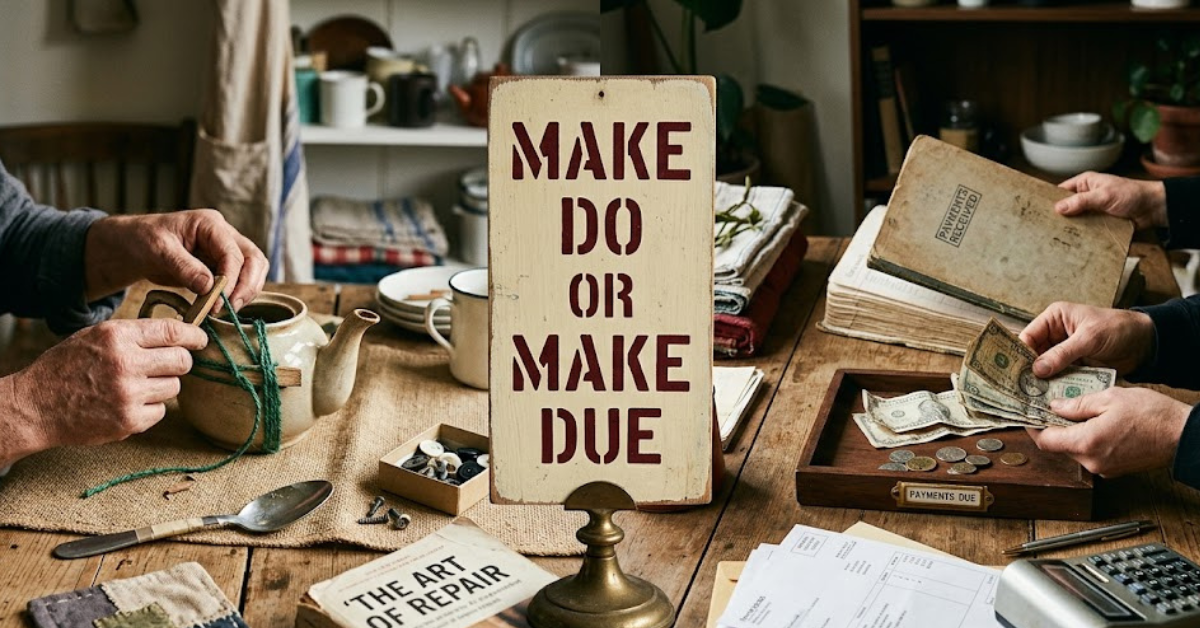

The confusion between make do or make due is a surprisingly common grammar mistake, especially in spoken English and informal writing. At first glance, both versions look believable, which is exactly why so many people mix them up.
If you’ve ever wondered is it make do or make due?, you’re definitely not alone. The phrase is often used when talking about managing with limited resources, but only one version is actually correct in standard English. In this guide, we’ll break down the correct expression, its meaning, usage, and clear examples so you never get it wrong again.
Make Do or Make Due: Which Is Correct?
The correct phrase is “make do.”
“Make due” is a common mistake and is not considered grammatically correct in standard English.
So when comparing make do or make due, the answer is simple:
- Correct: make do
- Incorrect: make due
What Does “Make Do” Mean?
The phrase make do means to manage or cope with something less than ideal. It is used when someone has to use what is available instead of what they actually need or prefer.
Simple Meaning
- to manage with limited resources
- to cope with what you have
- to accept something less ideal temporarily
It often appears in everyday conversations when people are improvising or adapting.
Make Do or Make Due Meaning Explained
When people search for make do or make due meaning, they are usually trying to understand how the phrase works in real life.
Example Meaning
If you “make do,” you:
- adjust to a situation
- use what is available
- don’t wait for perfect conditions
It reflects practicality and flexibility in daily life.
Why People Say “Make Due”
The mistake happens because English speakers are influenced by similar-sounding words.
1. Sound Confusion
“Do” and “due” sound similar in fast speech.
2. Logical Assumption
People think “due” fits because it is a common English word.
3. Typing Errors
Autocorrect and fast typing often reinforce the wrong version.
However, grammatically, “due” has nothing to do with the meaning of the phrase.
Is It Make Do or Make Due in Grammar?
From a grammar perspective, make do is the only correct expression.
Why “Make Do” Works
- “Do” here acts as a verb meaning to manage or perform
- The phrase historically evolved from older English usage
- It is recognized in dictionaries and formal writing
Why “Make Due” Does Not Work
- “Due” means expected or owed
- It does not fit the meaning of managing with limited resources
- It is not a standard idiomatic expression
I Can Make Do or Make Due: Correct Usage
When using the phrase in sentences like “I can make do or make due”, the correct version is:
- I can make do.
Correct Examples
- I can make do with this old phone for now.
- We will make do with what we have in the kitchen.
- She learned to make do during difficult times.
Incorrect Examples
- I can make due with this old phone.
- We will make due with what we have.
To Make Do or Make Due in Everyday Language
The correct expression to make do or make due is always “make do.”
Everyday Situations
You might use it when:
- cooking with limited ingredients
- using temporary tools
- adapting to budget constraints
- working with incomplete resources
It is a very practical phrase used in real-life situations.
Common Usage Examples of Make Do
Here are simple and natural examples of how the phrase is used:
- We had no chairs, so we made do with cushions.
- She had to make do with a smaller budget.
- They made do without electricity for a few hours.
- I’ll make do with coffee instead of breakfast.
These examples show how flexible the phrase is in daily communication.
Make Do or Make Due in Writing and Speech
In both formal and informal English, only make do should be used.
Where You’ll See It Used
- academic writing
- business communication
- storytelling and novels
- everyday conversation
“Make due” may appear in informal writing, but it is considered incorrect.
Easy Trick to Remember the Correct Form
Here’s a simple memory trick:
- “Do” means action
- “Make do” = make something work
So:
- you are doing something with what you have
- not referring to anything that is “due” or expected
This makes it easier to remember the correct phrase.
Why This Phrase Confuses So Many People
The confusion around make do or make due happens because:
- English pronunciation often hides spelling differences
- Both words sound natural in speech
- Many phrases in English are irregular idioms
- Online misinformation spreads quickly
But once you understand the meaning, the correct usage becomes easy.
FAQs
Is it make do or make due?
The correct phrase is make do.
What does make do mean?
It means to manage or cope with what you have available.
Why do people write make due?
It happens due to sound similarity and spelling confusion.
Is make due ever correct?
No, “make due” is not grammatically correct in standard English.
Can I say “I can make do”?
Yes, “I can make do” is correct and commonly used.
Is make do formal or informal?
It is used in both formal and informal English.
What is a synonym for make do?
Similar phrases include:
- manage with
- get by
- cope with
- improvise
Conclusion
The confusion between make do or make due is understandable, but the correct expression is always “make do.” It is a widely used English idiom that simply means managing with what you have, even if conditions are not ideal.
While “make due” may appear in informal writing, it is not grammatically correct and should be avoided in both professional and everyday communication. Understanding this small but important difference helps improve clarity and accuracy in your English writing.
Now that you know the correct usage, you can confidently use “make do” in conversations, writing, and real-life situations without hesitation.