
When people search how far away is a cure for herpes?, they’re usually looking for hope, clarity, and a realistic timeline. It’s a fair question—herpes is lifelong, widely misunderstood, and often surrounded by online speculation.
The short scientific answer is this: we are not close to a complete cure yet, but research is advancing in promising directions such as gene editing, antiviral vaccines, and immune therapies. A true cure is still likely years away, but the science is moving faster than it has in decades.
Let’s break it down in a simple, honest, and up-to-date way.
Why Herpes Is So Difficult to Cure
To understand how far away is a cure for herpes?, you first need to know why it’s so stubborn.
Herpes simplex virus (HSV-1 and HSV-2) behaves differently from most viruses:
- It hides inside nerve cells
- It becomes “latent” (inactive but not gone)
- It reactivates periodically
- It evades the immune system
This ability to hide in nerve ganglia is the biggest barrier to a permanent cure.
Once the virus is inside those cells, the immune system can’t fully detect or eliminate it.
Current Treatments: Control, Not Cure
Right now, there is no approved cure for herpes. However, antiviral medications are highly effective at managing symptoms.
Common treatments include:
- Acyclovir
- Valacyclovir
- Famciclovir
These medications help:
- Reduce outbreak frequency
- Shorten healing time
- Lower transmission risk
- Ease symptoms
But they do not remove the virus from the body.
So when people ask how far away is a cure for herpes?, it’s important to understand that today’s medicine focuses on control, not elimination.
How Far Away Is a Cure for Herpes? What Science Actually Says
The honest answer from most virologists is cautious:
- A full cure is not expected soon
- A functional cure or long-term suppression may come first
- A sterilizing cure (complete removal of virus) is still a long-term goal
Realistic timeline (based on current research trends):
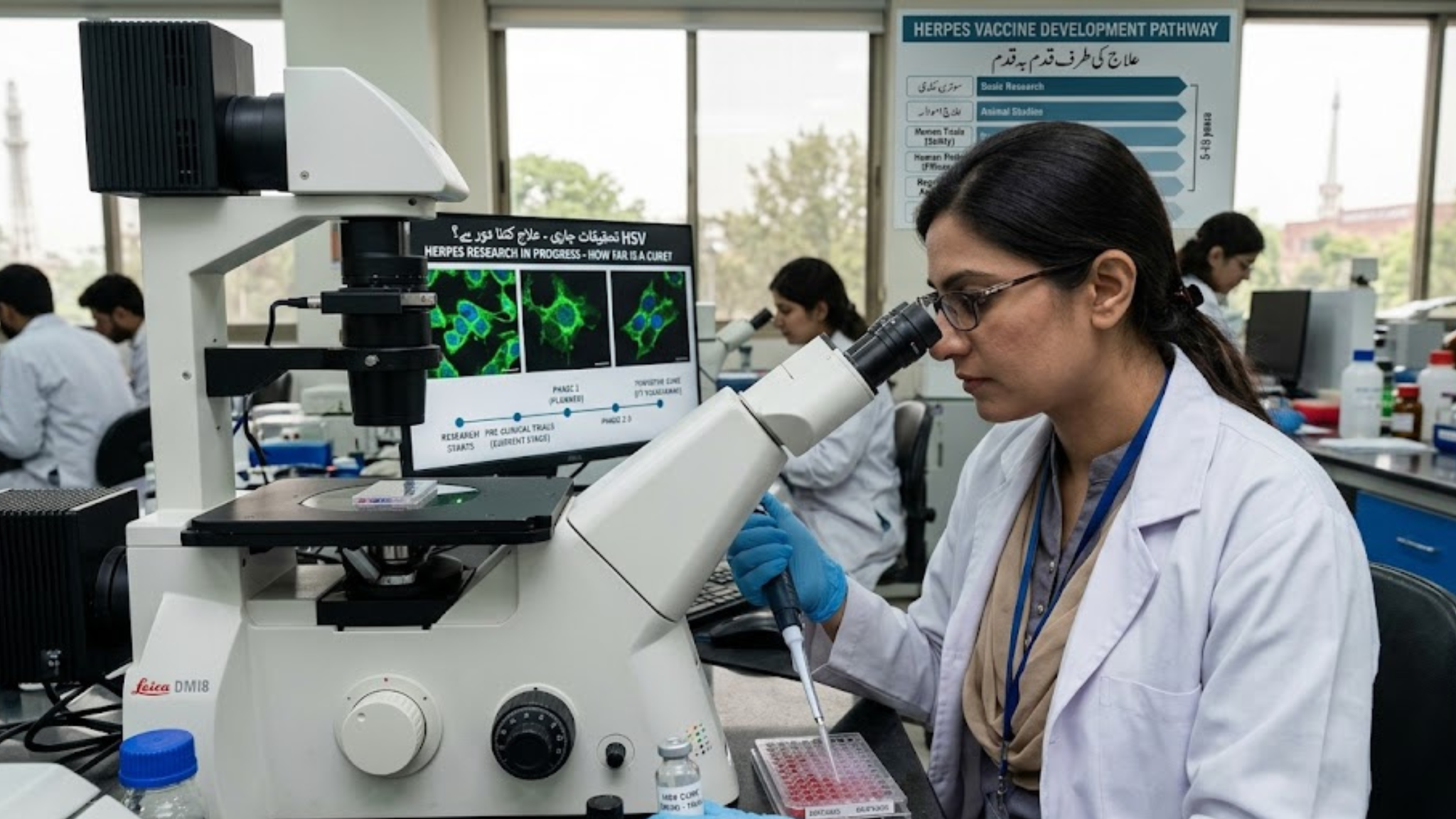
- Better treatments: 5–10 years
- Functional cure possibilities: 10–15+ years
- Complete cure: unknown, likely longer
So when asking how far away is a cure for herpes?, the most accurate answer is: it’s still a long-term scientific challenge, not a near-future solution.
Promising Research That Gives Hope
Even though a cure isn’t available yet, research is more active than ever.
1. Gene Editing (CRISPR Technology)
One of the most exciting areas is gene editing.
Scientists are exploring ways to:
- Cut HSV DNA out of infected cells
- Disable viral replication
- Permanently silence the virus
Early lab studies show promising results in animals, but human trials are still limited.
2. Therapeutic Vaccines
Unlike traditional vaccines, these are designed for people who already have herpes.
Goals include:
- Reducing outbreaks
- Strengthening immune response
- Possibly suppressing viral reactivation
Several candidates are currently in clinical trials.
3. mRNA Vaccine Research
Inspired by COVID-19 vaccine technology, researchers are developing mRNA-based herpes vaccines.
Potential benefits:
- Prevent infection
- Reduce symptom severity
- Improve immune targeting
This area is still early-stage but growing quickly.
4. Immune System Engineering
Another approach focuses on training the immune system to better control HSV.
This includes:
- T-cell enhancement therapies
- Immune boosters targeting viral latency
- Long-term suppression strategies
Why a Cure Is So Hard to Achieve
Understanding how far away is a cure for herpes? requires understanding the biological challenge.
Herpes is difficult because:
- It hides in long-lived nerve cells
- It integrates into the host system
- It can remain inactive for years
- Removing it risks damaging nerves
A cure would need to eliminate the virus without harming essential nerve tissue, which is extremely complex.
What About “Functional Cure”?
You may hear the term “functional cure” in research discussions.
This means:
- The virus still exists in the body
- But it is completely controlled
- No symptoms or transmission risk in most cases
This is considered a more realistic short-term goal than full eradication.
What People Say Online (Including Reddit Discussions)
Searches like how far away is a cure for herpes? reddit often bring mixed opinions.
Common themes include:
- Optimism about gene editing breakthroughs
- Claims that a cure is “just around the corner”
- Frustration about slow clinical progress
However, most medical experts emphasize that while research is real, no confirmed cure has reached human approval yet.
Online discussions can be hopeful, but they are often ahead of scientific reality.
What This Means for Patients Today
Even without a cure, herpes is:
- Highly manageable
- Medically well understood
- Treatable in terms of symptoms
Most people with HSV:
- Live normal lifespans
- Have occasional or mild outbreaks
- Manage it effectively with medication
The focus today is quality of life, not just cure timelines.
FAQs
How far away is a cure for herpes?
A full cure is still likely many years away. Better treatments may arrive sooner than a complete cure.
How far away is a cure for herpes? reddit opinions reliable?
Reddit discussions can be interesting but are not medically reliable. Scientific research gives a more accurate picture.
Are scientists close to curing herpes?
They are making progress in gene therapy and vaccines, but no cure has reached clinical approval yet.
What is the closest thing to a cure today?
Antiviral medications that suppress outbreaks are currently the best available option.
Will herpes ever be cured?
It is possible in the future, but it remains a very difficult scientific challenge.
Conclusion
The question how far away is a cure for herpes? reflects a real hope shared by millions of people. While science has not yet delivered a cure, research in gene editing, vaccines, and immune therapies is advancing steadily.
A complete cure is still not close, but improved treatments and possibly functional suppression could arrive in the coming years. For now, herpes remains a manageable condition, and the long-term outlook is more hopeful than ever before.
If you’re following this topic, the next step is to keep an eye on clinical trials and emerging therapies—because that’s where real breakthroughs will appear first.