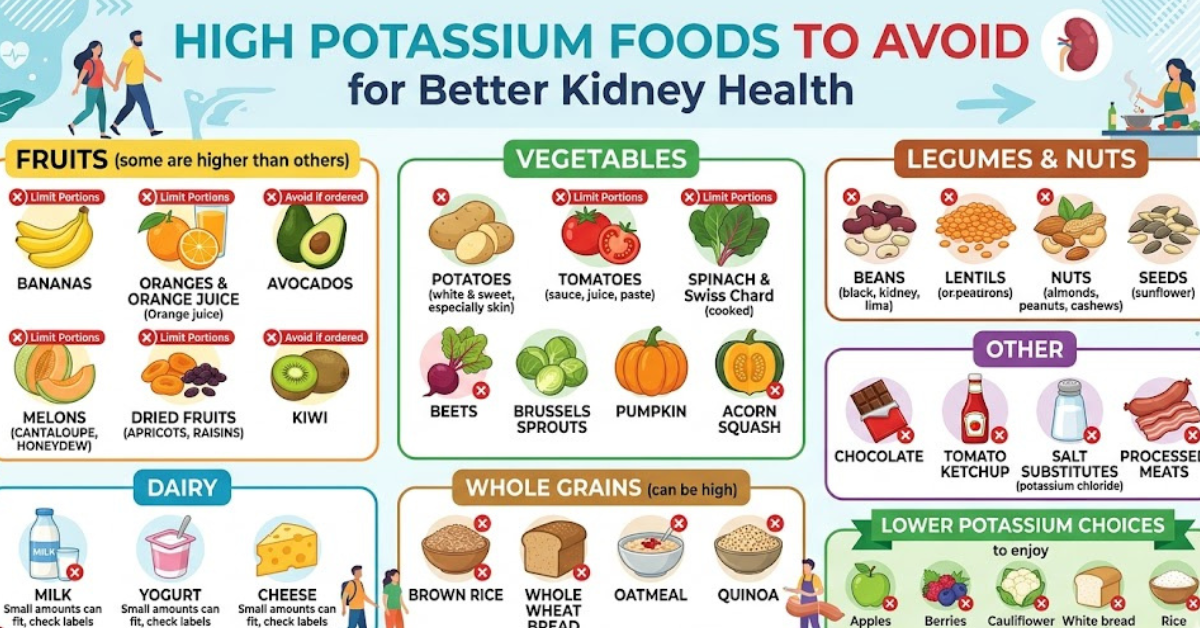

If you’ve been told to watch your potassium intake, understanding high potassium foods to avoid can make a huge difference in your daily health. Potassium is essential for muscles and heart function, but too much of it—especially for people with kidney disease—can become dangerous.
In this guide, we’ll break down the most common high-potassium foods, why they matter, and how to manage your diet without feeling overwhelmed.
Why You May Need to Limit High Potassium Foods
Potassium helps regulate heartbeat, nerve signals, and muscle contractions. However, when kidneys can’t remove excess potassium properly, it builds up in the blood—a condition called hyperkalemia.
This is why doctors often recommend being careful with high potassium foods to avoid, especially for people with:
- Chronic kidney disease (CKD)
- Diabetes-related kidney issues
- Heart conditions
- Certain medications that raise potassium levels
Too much potassium can lead to symptoms like muscle weakness, irregular heartbeat, or even serious cardiac complications.
High Potassium Foods to Avoid Complete List
Below are the most common foods high in potassium that may need to be limited or avoided depending on your condition.
Fruits High in Potassium
Some fruits are surprisingly rich in potassium, even though they seem healthy:
- Bananas
- Oranges and orange juice
- Avocados
- Kiwis
- Mangoes
- Dried fruits (raisins, dates, apricots)
Tip: Fresh apples, berries, and grapes are usually lower in potassium.
Vegetables High in Potassium
Vegetables are essential, but some contain very high potassium levels:
- Potatoes (especially with skin)
- Sweet potatoes
- Tomatoes and tomato paste
- Spinach
- Beet greens
- Mushrooms
- Pumpkin
Tip: Leaching or boiling vegetables can reduce potassium content.
Dairy Products to Watch
Dairy can also contribute to higher potassium intake:
- Milk (all types)
- Yogurt
- Ice cream
- Cheese (especially processed varieties)
If you’re on a strict renal diet, your doctor may suggest limiting portion sizes.
Protein Sources High in Potassium
Certain protein-rich foods contain more potassium than expected:
- Salmon
- Tuna
- Chicken (in large portions)
- Beans and lentils
- Nuts and seeds
Tip: Plant-based proteins can be healthy, but portion control is key.
Processed and Packaged Foods
Processed foods are often hidden sources of potassium additives:
- Fast food meals
- Packaged snacks
- Instant noodles
- Processed meats (sausages, deli meats)
- Sports drinks
Look for ingredients like potassium chloride, which is commonly added as a salt substitute.
How to Manage Potassium Intake Safely
Managing high potassium foods to avoid doesn’t mean giving up flavor. It’s about smart choices:
- Choose fresh foods over processed ones
- Control portion sizes
- Drain and rinse canned vegetables
- Use herbs and spices instead of salt substitutes
- Work with a dietitian if you have kidney issues
Small adjustments can make a big difference in potassium balance.
Who Should Be Most Careful?
Not everyone needs to strictly avoid high potassium foods. However, extra caution is needed for:
- Kidney disease patients
- Dialysis patients
- People taking ACE inhibitors or potassium-sparing diuretics
- Elderly individuals with reduced kidney function
If you fall into any of these groups, dietary monitoring becomes especially important.
FAQs About High Potassium Foods to Avoid
1. What are the worst high potassium foods to avoid?
Bananas, potatoes, tomatoes, oranges, and processed foods with potassium additives are among the most important to limit.
2. Can I eat fruits if I have high potassium levels?
Yes, but choose low-potassium options like apples, berries, grapes, and pineapples in controlled portions.
3. How do I reduce potassium in vegetables?
Boiling and soaking vegetables in water (leaching) can help reduce potassium content.
4. Are salt substitutes safe?
Many salt substitutes contain potassium chloride, which should be avoided if you have kidney issues.
5. Do healthy people need to worry about potassium?
Usually no. Healthy kidneys naturally balance potassium levels effectively.
Conclusion
Understanding high potassium foods to avoid is essential for maintaining healthy potassium levels, especially if you have kidney or heart-related conditions. By being mindful of fruits, vegetables, dairy, and processed foods, you can better control your diet without sacrificing nutrition.
The key is balance—choose lower-potassium alternatives, watch portion sizes, and stay informed about hidden sources in packaged foods. If you’re unsure, a healthcare professional or dietitian can help tailor a plan that fits your needs.
Taking control of your diet today can help protect your health in the long run.