
If you’ve recently started treatment and are wondering what to avoid when taking low dose naltrexone, you’re already on the right track toward using it safely and effectively. Low dose naltrexone (LDN) has gained attention for its potential role in managing conditions like autoimmune disorders, chronic pain, and inflammation—but it’s not something to take casually without understanding the rules.
While LDN is generally well-tolerated, certain medications, habits, and timing mistakes can reduce its effectiveness or increase side effects. In this guide, we’ll break down exactly what to avoid when taking low dose naltrexone so you can get the most benefit from your treatment.
Understanding Low Dose Naltrexone (LDN)
Low dose naltrexone (LDN) is a modified use of the FDA-approved medication naltrexone, typically used in much lower doses (often 0.5 mg to 4.5 mg). At these doses, it is believed to temporarily block opioid receptors, which may help regulate the immune system and reduce inflammation.
Because LDN works differently from standard medications, knowing what to avoid when taking low dose naltrexone is essential for safety and effectiveness.
What to Avoid When Taking Low Dose Naltrexone
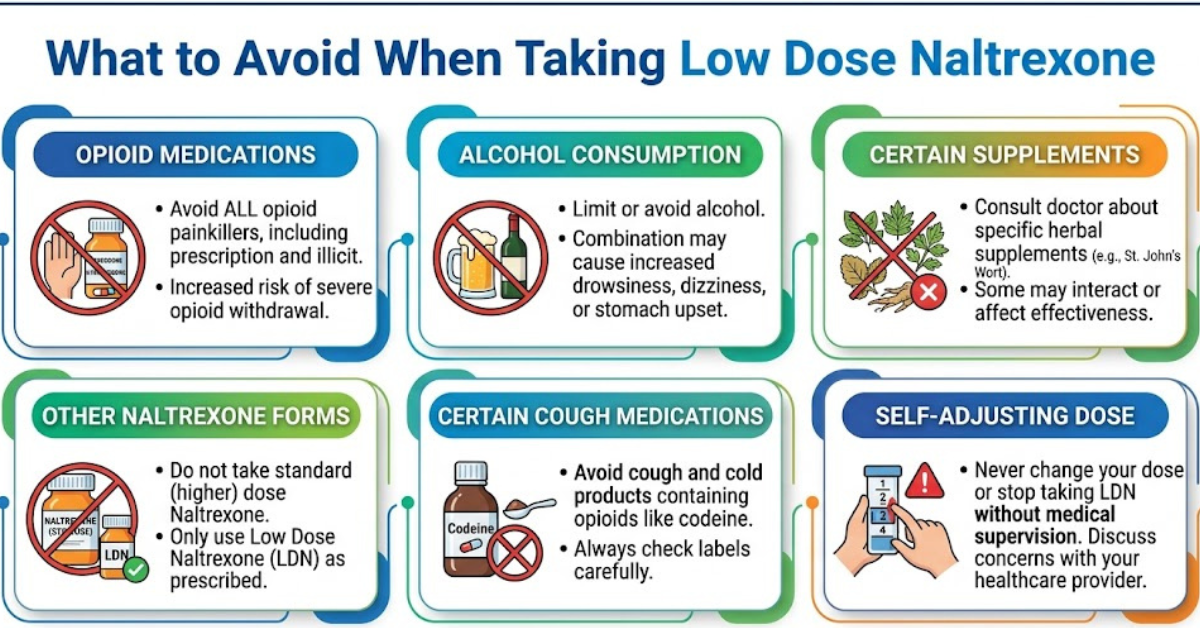
1. Opioid Medications and Painkillers
One of the most important rules is to avoid opioids while taking LDN.
Common opioids include:
- Morphine
- Codeine
- Oxycodone
- Hydrocodone
- Fentanyl
LDN blocks opioid receptors, which means these medications may not work properly. In some cases, combining them can also trigger withdrawal-like symptoms.
Always inform your doctor if you are using any pain medications.
2. Alcohol Abuse or Heavy Drinking
Moderate alcohol consumption may not always be strictly prohibited, but heavy drinking can interfere with how your liver processes medications.
When considering what to avoid when taking low dose naltrexone, alcohol misuse is high on the list because:
- It may increase side effects like nausea or dizziness
- It can stress the liver
- It may reduce treatment benefits
3. Incorrect Timing of Dosing
Timing plays a key role in LDN effectiveness.
Most people take LDN at night because it may temporarily increase endorphin activity during sleep. However:
- Taking it inconsistently can reduce benefits
- Changing dose timing without guidance may disrupt results
Stick to a routine unless your healthcare provider advises otherwise
4. Starting at a High Dose Too Quickly
LDN is typically introduced gradually.
Avoid:
- Jumping straight to full dose (e.g., 4.5 mg)
- Increasing dose without medical supervision
Common side effects like vivid dreams, insomnia, or headaches may worsen if you escalate too quickly.
5. Mixing Without Medical Guidance
Certain medications or supplements may interact with LDN, even if not fully studied.
Be cautious with:
- Immunosuppressants
- Certain antidepressants (in some cases)
- Experimental or immune-modulating supplements
Always consult a healthcare professional before combining treatments.
6. Expecting Immediate Results
LDN is not a fast-acting medication.
Avoid the mistake of:
- Stopping too early
- Changing dose frequently out of impatience
Many users notice benefits only after several weeks to months of consistent use.
7. Ignoring Underlying Health Conditions
People with liver disease, certain autoimmune conditions, or opioid dependency history need extra caution.
When thinking about what to avoid when taking low dose naltrexone, self-adjusting treatment without medical supervision is one of the biggest risks.
Common Side Effects to Watch For
While generally safe, LDN may cause mild side effects, especially at the beginning:
- Vivid dreams or insomnia
- Headaches
- Mild nausea
- Fatigue
These often improve as the body adjusts.
Tips for Safer Use of LDN
Here are a few practical tips to get better results:
- Take LDN at the same time daily
- Start with a low dose and increase slowly
- Stay hydrated
- Track symptoms and improvements
- Work closely with your healthcare provider
FAQs About Low Dose Naltrexone
1. Can I take painkillers with low dose naltrexone?
Avoid opioid-based painkillers. Non-opioid options may be allowed, but always check with your doctor.
2. How long does LDN take to work?
Some people notice changes in 2–4 weeks, while others may need 2–3 months.
3. Is alcohol completely forbidden with LDN?
Not necessarily, but heavy drinking should be avoided due to liver strain and reduced effectiveness.
4. What happens if I miss a dose?
Missing a dose occasionally is usually not harmful. Just resume your normal schedule.
5. Can LDN be taken long-term?
Yes, many people use low dose naltrexone long-term under medical supervision.
Conclusion
Understanding what to avoid when taking low dose naltrexone is just as important as knowing how to take it. Avoiding opioids, improper dosing habits, alcohol misuse, and unsupervised combinations can significantly improve safety and outcomes.
LDN works best when used consistently, patiently, and with medical guidance. If you’re considering or already using it, stay informed and work closely with your healthcare provider to tailor the approach to your needs.
For more insights on LDN use, drug interactions, and autoimmune support strategies, explore related health guides and stay updated with evidence-based information.