
If you’ve ever wondered how much caffeine is in a cup of coffee, you’re not alone. That morning cup can feel like magic, but the actual caffeine content isn’t as straightforward as most people think. It changes depending on the beans, brewing method, and even the cup size.
On average, how much caffeine is in a cup of coffee ranges from 80 mg to 200 mg per 8-ounce (240 ml) serving. But that’s just a general estimate—some cups can pack a much stronger punch.
Let’s break it all down in a simple, realistic way so you know exactly what you’re drinking.
Average Caffeine in a Cup of Coffee
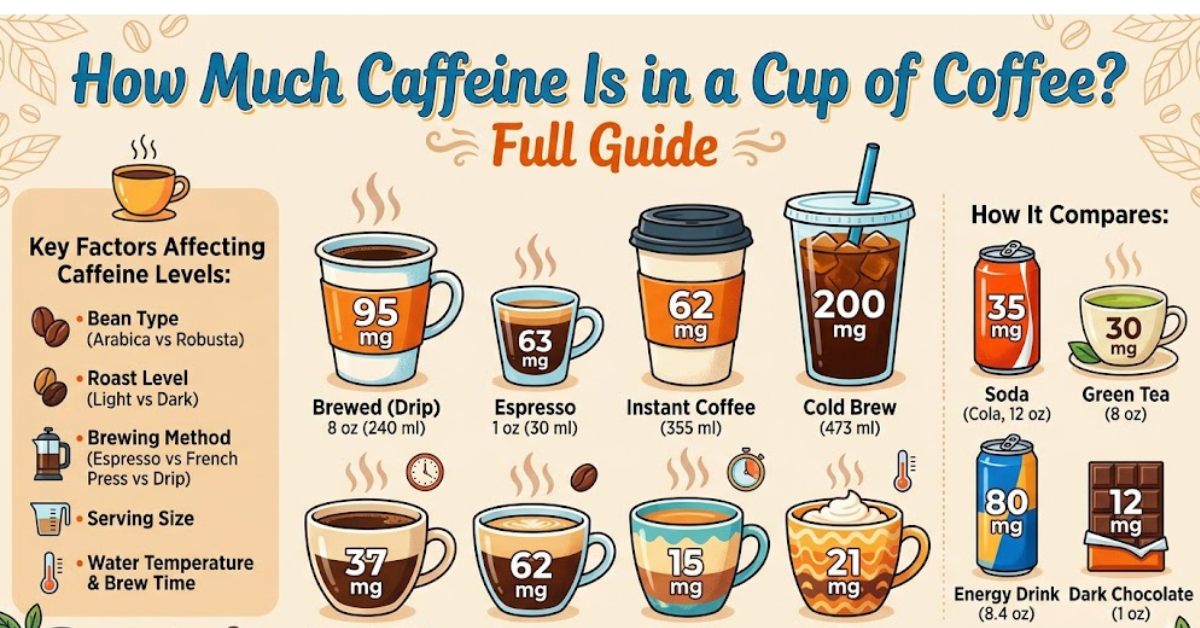
The caffeine content in coffee varies widely, but here’s a quick breakdown of typical amounts:
- Brewed coffee (8 oz): 80–120 mg
- Espresso (1 oz shot): 60–75 mg
- Instant coffee (8 oz): 30–90 mg
- Decaf coffee (8 oz): 2–15 mg
So when people ask how much caffeine is in a cup of coffee, the honest answer is: it depends on what kind of coffee you’re drinking.
A large café-style mug (12–16 oz) can easily push your caffeine intake to 150–300 mg per cup.
What Affects How Much Caffeine Is in Coffee?
Not all coffee is created equal. Several factors influence caffeine levels.
1. Type of Coffee Beans
There are two main beans used worldwide:
- Arabica: Smoother taste, lower caffeine
- Robusta: Stronger, more bitter, almost double the caffeine
Robusta beans are often used in instant coffee and some espresso blends because of their strong kick.
2. Brewing Method
How you brew your coffee plays a huge role in caffeine extraction.
Here’s how different methods compare:
- Drip coffee: Moderate to high caffeine
- French press: Higher caffeine due to longer steeping
- Espresso: High concentration, but small serving
- Cold brew: Often the highest total caffeine per serving
Cold brew, for example, can contain up to 200–300 mg per cup, depending on how it’s prepared.
3. Serving Size
This is where most people get misled.
A “cup of coffee” at home is usually 8 oz, but coffee shop sizes are often:
- Small: 8–12 oz
- Medium: 12–16 oz
- Large: 16–20 oz
So when you order a large latte, you’re likely consuming more caffeine than you realize.
4. Roast Level
Contrary to popular belief, darker roasts don’t always mean stronger caffeine.
- Light roast: Slightly more caffeine by weight
- Dark roast: Slightly less caffeine per bean (but stronger taste)
The difference is small, but it surprises many coffee drinkers.
How Much Caffeine Is Safe Per Day?
Health experts, including the FDA, suggest that most adults can safely consume up to:
- 400 mg of caffeine per day
That equals roughly:
- 3–4 cups of brewed coffee
- or 2–3 large café coffees
However, sensitivity varies. Some people feel jittery after just one cup, while others can drink several without issues.
Signs You’re Drinking Too Much Caffeine
Too much caffeine can lead to unwanted side effects. Watch out for:
- Restlessness or anxiety
- Fast heartbeat
- Trouble sleeping
- Headaches
- Digestive discomfort
If you notice these regularly, your answer to how much caffeine is in a cup of coffee might be less important than how much you personally tolerate.
Coffee vs Other Drinks: Caffeine Comparison
To put things in perspective:
- Coffee (8 oz): 80–120 mg
- Black tea (8 oz): 40–70 mg
- Green tea (8 oz): 20–45 mg
- Energy drink (8 oz): 70–100 mg
- Soda (12 oz): 30–50 mg
Coffee still remains one of the strongest everyday caffeine sources.
Tips to Control Your Caffeine Intake
If you love coffee but want balance, here are simple strategies:
- Choose smaller cup sizes
- Mix regular coffee with half-caf options
- Switch to decaf after midday
- Try lighter roasts or tea alternatives
- Avoid multiple high-caffeine drinks close together
These small changes can help you enjoy coffee without overdoing it.
FAQs About Caffeine in Coffee
1. How much caffeine is in a cup of coffee on average?
An 8 oz cup of brewed coffee typically contains 80–120 mg of caffeine, depending on beans and brewing method.
2. Is espresso stronger than regular coffee?
Yes and no. Espresso has more caffeine per ounce, but a single serving is small. A full cup of drip coffee usually has more total caffeine.
3. Does decaf coffee contain caffeine?
Yes, but very little. A cup of decaf usually has 2–15 mg of caffeine.
4. Which coffee has the highest caffeine content?
Cold brew and Robusta-based coffee generally contain the highest caffeine levels.
5. Can I drink coffee every day?
Yes, most healthy adults can safely consume up to 400 mg of caffeine daily, which equals about 3–4 cups of coffee.
Conclusion
So, how much caffeine is in a cup of coffee? The answer isn’t fixed—it ranges widely from 80 mg to over 300 mg, depending on the type of coffee, brewing method, and serving size.
Understanding these differences helps you control your intake and enjoy coffee in a way that fits your lifestyle. Whether you prefer a mild morning brew or a strong espresso kick, knowing what’s in your cup makes every sip more intentional.
If you’re curious about optimizing your caffeine habits, you might also explore topics like coffee brewing methods, decaf alternatives, or caffeine timing for better sleep.