
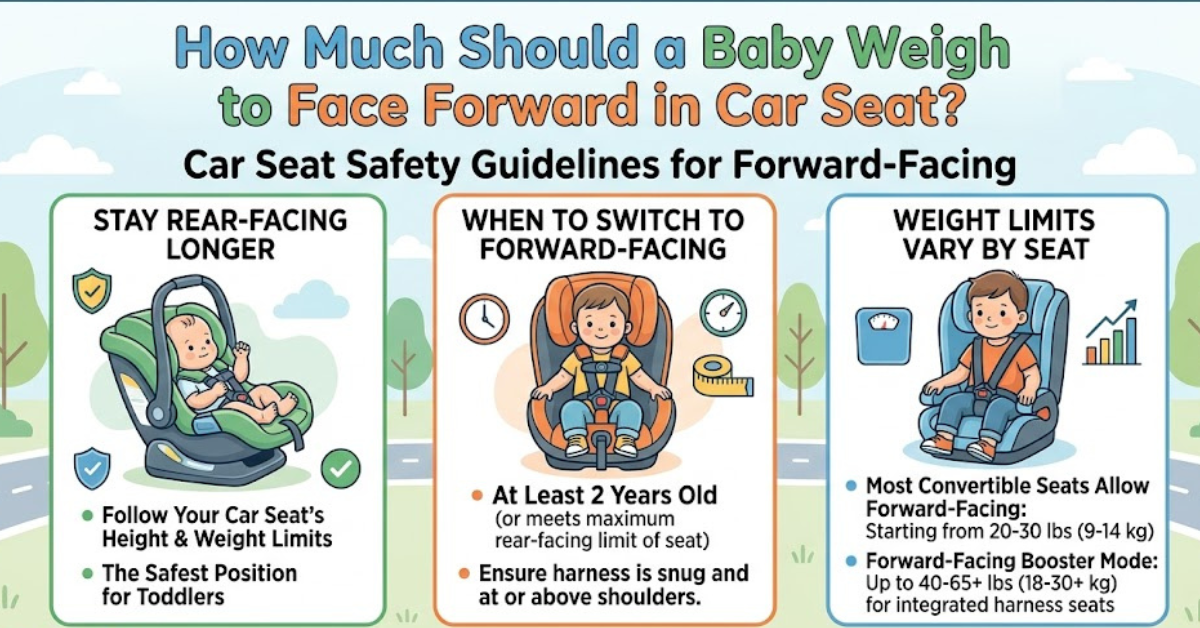

One of the most common questions new parents ask is about car seat safety: how much should a baby weigh to face forward in car seat and when is it actually safe to make that switch? It’s a simple question, but the answer is more detailed than most people expect.
The truth is, moving a child to a forward-facing seat isn’t just about weight alone—it involves age, height, developmental readiness, and car seat manufacturer limits. In this guide, you’ll learn the real safety recommendations, expert-backed guidelines, and practical tips to help you make the safest decision for your child.
Understanding Forward-Facing Car Seat Basics
Before focusing on how much should a baby weigh to face forward in car seat, it’s important to understand how car seat stages work.
Most children move through three main stages:
- Rear-facing car seat (infant or convertible seat)
- Forward-facing car seat with a harness
- Booster seat
Experts, including the American Academy of Pediatrics (AAP), recommend keeping children rear-facing for as long as possible because it provides better protection for the head, neck, and spine.
So what about weight?
Traditionally, many parents assumed that once a baby reaches a certain weight—usually around 9 to 18 kg (20 to 40 lbs)—they could switch forward-facing. However, modern safety standards show that weight is only one factor, not the main rule.
The Real Answer: Weight vs. Safety Guidelines
When people search how much should a baby weigh to face forward in car seat, they often expect a single number. In reality, there isn’t one universal weight requirement.
Instead, safety experts recommend:
- Minimum weight: Usually around 9 kg (20 lbs) depending on the car seat
- Maximum rear-facing limit: Often 13–22 kg (30–50 lbs) depending on the seat model
- Age requirement: At least 2 years old, though longer is safer
Most importantly, children should remain rear-facing until they reach the maximum height or weight limit of their rear-facing seat.
This means your child might technically meet the weight requirement but still not be ready to turn forward.
Why Rear-Facing Is Safer for Longer
Understanding how much should a baby weigh to face forward in car seat also means understanding why rushing the transition can be risky.
Rear-facing seats protect the body in a crash by:
- Supporting the head, neck, and spine evenly
- Reducing impact force during sudden stops
- Preventing forward head movement, which can cause serious injury
Children under 2 years old have softer bones and weaker neck muscles, making rear-facing significantly safer even if they meet the weight threshold.
Key Factors That Matter More Than Weight
While researching how much should a baby weigh to face forward in car seat, experts emphasize several factors that matter more than weight alone:
1. Age
Most safety organizations recommend at least 2 years, with many suggesting 3–4 years if possible.
2. Height
If your child’s head is within 1 inch of the top of the seat shell, they may have outgrown rear-facing limits.
3. Car Seat Limits
Every car seat has specific manufacturer guidelines printed on the label.
4. Physical Development
Stronger neck and spine development reduces risk in forward-facing positions.
When It’s Actually Safe to Switch
A common misconception around how much should a baby weigh to face forward in car seat is that hitting a weight milestone alone is enough.
A child is typically ready when:
- They exceed rear-facing weight or height limits
- They are at least 2 years old (preferably older)
- Their car seat allows forward-facing harness use
- They can sit properly without slouching or leaning forward
Even then, many safety experts still recommend waiting longer if the seat allows extended rear-facing use.
Common Mistakes Parents Make
Understanding how much should a baby weigh to face forward in car seat helps avoid these frequent errors:
- Switching too early based only on weight
- Ignoring height limits
- Using forward-facing before age 2
- Moving to a booster seat too soon
- Not checking the car seat manual
These mistakes often happen due to outdated advice or misinformation from older generations.
Practical Safety Tips for Parents
To ensure you’re making the safest choice:
- Always check your car seat manual
- Keep your child rear-facing as long as possible
- Use a properly installed harness system
- Adjust straps to shoulder level (not above or below incorrectly)
- Recheck seat fit every few months as your child grows
These steps are just as important as knowing how much should a baby weigh to face forward in car seat.
Key Takeaways
- There is no single weight that determines forward-facing readiness
- Age, height, and seat limits matter more than weight
- Rear-facing is significantly safer for young children
- Most children should stay rear-facing until at least age 2–4
- Always follow your specific car seat manufacturer guidelines
FAQs
1. How much should a baby weigh to face forward in car seat safely?
Most seats allow forward-facing starting around 9–13 kg (20–30 lbs), but safety experts recommend waiting until at least age 2 and meeting height limits as well.
2. Is weight the most important factor for switching seats?
No, weight is only one factor. Age, height, and car seat manufacturer rules are equally or more important for safety.
3. Can a 1-year-old sit forward-facing if they meet weight limits?
It is not recommended. Even if the weight is sufficient, a 1-year-old’s neck and spine are not developed enough for forward-facing safety.
4. What is the safest age to switch to forward-facing?
Most experts suggest waiting until at least 2 years old, but longer rear-facing use (3–4 years) is even safer.
5. What happens if a child is turned forward too early?
Turning too early increases the risk of head, neck, and spinal injuries in a crash due to increased forward motion impact.
6. Do all car seats have the same weight limit?
No, each car seat model has different rear-facing and forward-facing weight limits, so always check the manufacturer’s label.
Conclusion
Deciding how much should a baby weigh to face forward in car seat isn’t as simple as reaching a number on the scale. True safety depends on a combination of weight, age, height, and proper seat guidelines.
The safest approach is to keep your child rear-facing for as long as possible within your car seat’s limits. It may feel like a small decision, but it has a big impact on your child’s safety on the road.
If you’re unsure, take a moment to recheck your car seat manual and your child’s growth stage—because when it comes to car safety, extra caution is always worth it.