
If you’ve ever picked up a measuring tape and felt confused by all the tiny lines and numbers, you’re not alone. Learning this basic skill may look complicated at first, but it becomes easy once you understand the system behind it.
This topic is important because the tape measure is used everywhere—from home DIY projects to construction work and even sewing. Once you understand it, you can measure anything confidently without guessing.
In this guide, we’ll break everything down step by step in a simple, practical way so you can finally read measurements like a pro.
Understanding the Basics of a Tape Measure
Before learning properly, you need to understand its structure.
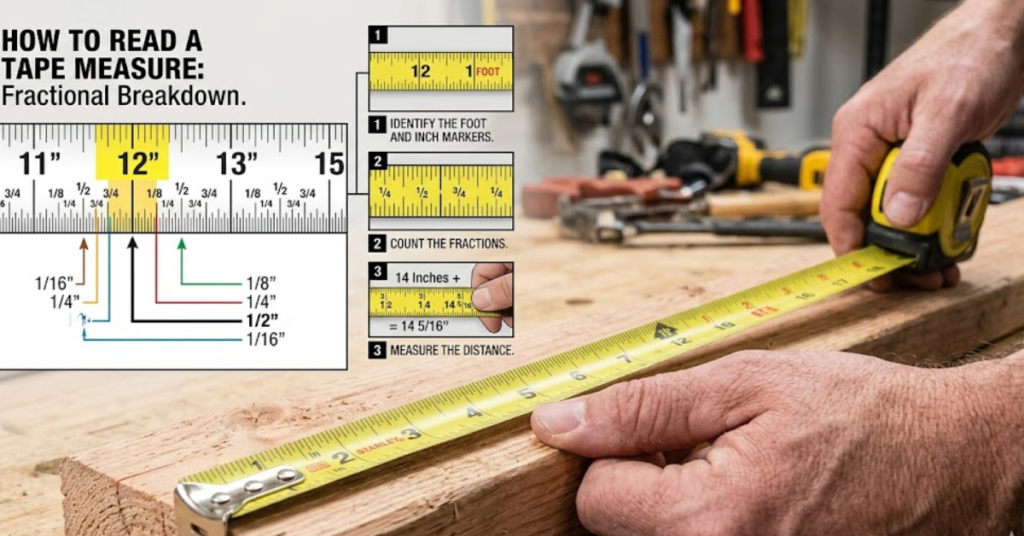
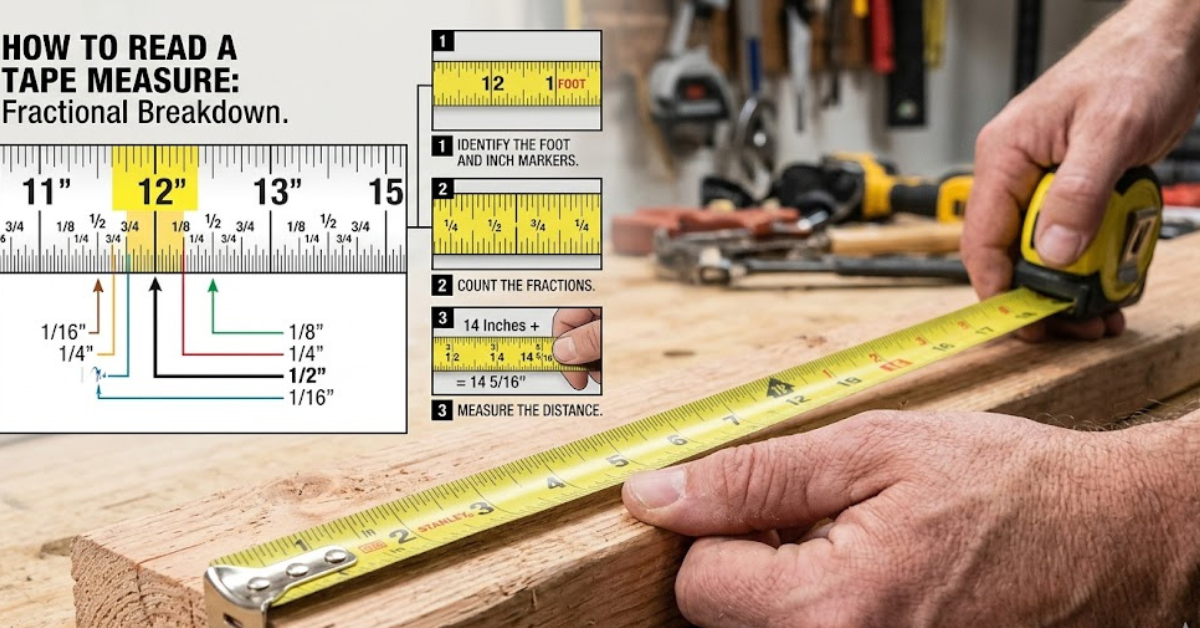
A standard tape measure includes:
- Inches (main large numbers)
- Feet markings
- Fractions of an inch
- Metric units (cm and mm on some tapes)
Most tapes combine imperial and metric systems for universal use.
Reading Measurements in Inches
Each big number equals 1 inch.
Basic structure:
- Whole numbers = full inches
- Halfway mark = 1/2 inch
- Smaller marks = 1/4, 1/8, 1/16
The smaller the line, the more precise the measurement.
Understanding Fractions
Accuracy depends on fractions.
Common divisions:
- 1/2 inch
- 1/4 inch
- 1/8 inch
- 1/16 inch
Simple idea:
- 1/2 = middle
- 1/4 = quarter
- 1/8 = smaller split
- 1/16 = very fine detail
Feet and Inches Together
12 inches equals 1 foot.
Example:
- 5 feet 6 inches = 66 inches total
Many tapes highlight feet with special markings for easy reading.
Metric System (cm and mm)
Metric units are simpler because they follow base-10.
Basics:
- 1 cm = 10 mm
- Small lines = millimeters
Example:
- 5 cm = 50 mm
Millimeter Precision
For detailed work:
- Each small line = 1 mm
- 10 mm = 1 cm
- 100 mm = 10 cm
This system is widely used in engineering and technical fields.
16ths and 32nds System
For high precision:
- 16 divisions per inch = standard precision
- 32 divisions per inch = very high precision
Common in carpentry and construction work.
Quick Reference Guide
- Big number = inches
- Long line = 1/2
- Medium line = 1/4
- Smaller line = 1/8
- Tiny line = 1/16
Metric:
- Large numbers = cm
- Small lines = mm
Easy Learning Method
Step-by-step approach:
- Start with whole inches
- Learn half inches
- Learn quarter marks
- Practice on real objects
- Add finer fractions gradually
Beginner-Friendly Tips
- Focus on inches first
- Don’t rush into fractions
- Measure everyday objects
- Practice regularly
Practice Worksheet Idea
A practice sheet helps reinforce learning with:
- Measurement exercises
- Fraction identification
- Object comparison tasks
Real-Life Uses
You’ll use this skill in:
- Home repairs
- Furniture measurement
- Sewing projects
- Construction work
Common Mistakes
Avoid these errors:
- Starting from the wrong point
- Confusing fractions
- Mixing metric and imperial units
- Poor alignment
FAQs
1. How can beginners learn quickly?
Start with inches, then slowly learn fractions using real objects.
2. What’s the easiest method?
Break it into steps: inches → halves → quarters → smaller divisions.
3. How do metric units work?
Each centimeter equals 10 millimeters.
4. Why are there so many lines?
They allow precise measurements at different levels.
5. Can I learn it fast?
Yes, with daily practice and real-world usage.
Conclusion
Reading a measuring tape becomes simple once you understand inches, fractions, and metric units. The key is to start small, practice often, and build accuracy step by step.
With regular use, this skill quickly becomes natural and extremely useful for everyday tasks, DIY projects, and professional work.