
Few breakfast smells are more tempting than freshly cooked bacon. While stovetop cooking is common, many home cooks are discovering that baking bacon is easier, cleaner, and more reliable. If you have ever wondered how to bake bacon for perfectly crispy results without grease splatters, you are in the right place.
Baking bacon in the oven allows the strips to cook evenly while freeing up space on the stovetop. It also works well for large batches, meal prep, brunch gatherings, and bacon-wrapped recipes. This guide covers everything you need to know, from temperatures and cooking times to air fryer methods and crispy bacon tips.
Why Baking Bacon Is Better Than Frying
Many people switch to oven-baked bacon because it offers several advantages.
Benefits include:
- Even cooking
- Less mess
- Easier cleanup
- Better crispiness
- Hands-free cooking
- Ability to cook large batches
Unlike frying, you do not need to constantly flip or monitor the bacon every minute.
What You Need to Bake Bacon
You only need a few kitchen basics.
Essential Supplies
- Baking sheet
- Aluminum foil or parchment paper
- Wire rack optional
- Tongs
- Paper towels
A wire rack allows grease to drip below the bacon, creating extra crispy texture.
How to Bake Bacon in the Oven
The oven method is the most popular and beginner-friendly approach.
Step-by-Step Instructions
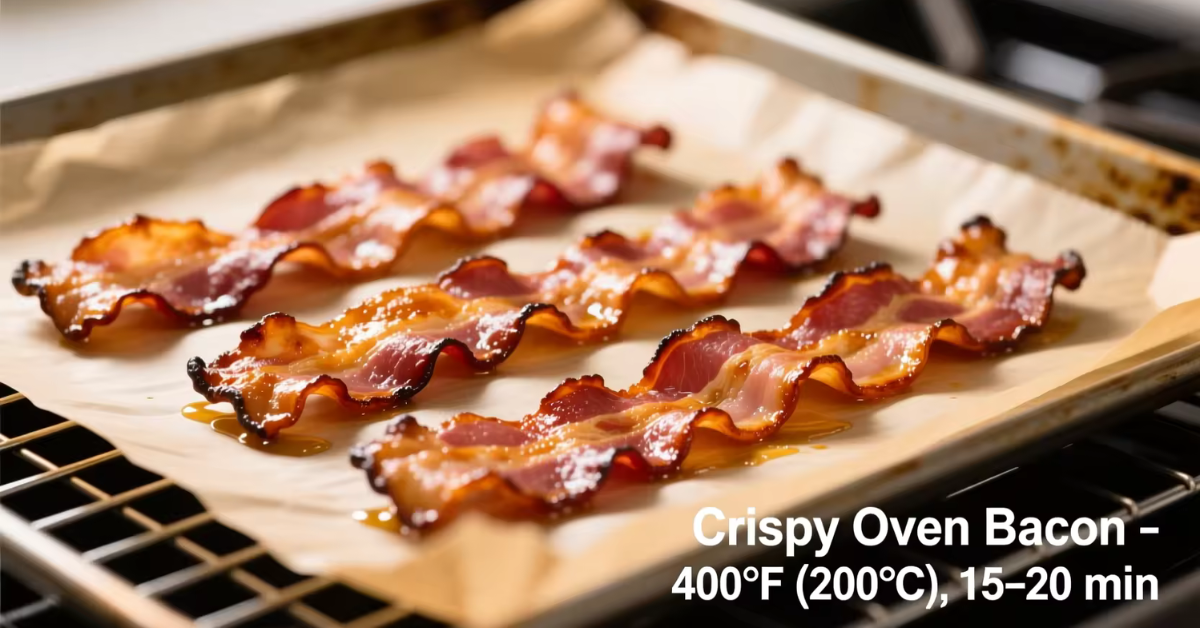
- Preheat the oven to 400°F
- Line a baking sheet with foil or parchment paper
- Arrange bacon strips in a single layer
- Bake for 15 to 20 minutes
- Remove when desired crispiness is reached
- Drain on paper towels
Cooking time depends on:
- Bacon thickness
- Oven accuracy
- Personal crispiness preference
How to Bake Bacon in Oven for Best Results
Consistency matters when baking bacon.
Helpful Tips
- Avoid overlapping strips
- Rotate the tray halfway if needed
- Watch closely during the final minutes
- Thick-cut bacon may need extra time
Even slight overcooking can quickly turn bacon too dark.
How to Bake Bacon Crispy
Crispy bacon comes down to temperature and airflow.
Best Crispy Bacon Tips
- Use a wire rack
- Bake at higher temperatures
- Cook slightly longer
- Pat bacon dry after cooking
Thin bacon becomes crispy faster, while thick-cut varieties stay chewier inside.
How to Bake Bacon at 350
Lower temperatures create slower, gentler cooking.
What to Expect at 350°F
- Softer texture
- More even rendering of fat
- Slightly longer cooking time
Typical cooking time:
- 20 to 30 minutes
This method works well for thicker bacon.
How to Bake Bacon at 375
Baking at 375°F balances crispiness and even cooking.
Average Cooking Time
- 18 to 25 minutes
This temperature helps reduce the risk of burning while still producing crispy edges.
How to Bake Bacon at 425
Higher heat creates crispier bacon faster.
Advantages of 425°F
- Faster cooking
- Extra crisp texture
- Better caramelization
Typical cooking time:
- 12 to 18 minutes
Watch carefully because bacon can burn quickly at higher temperatures.
How to Bake Bacon in the Oven at 400
Many cooks consider 400°F the sweet spot.
Why it works well:
- Reliable crispiness
- Balanced cooking speed
- Minimal burning risk
- Good fat rendering
For most standard bacon:
- 15 to 20 minutes is ideal
How to Bake Bacon in Oven at 400 Without Burning
To avoid burning:
- Use center oven rack
- Check after 12 minutes
- Remove thinner pieces earlier
- Avoid dark baking trays if possible
Every oven cooks differently, so adjustments may be necessary.
How to Bake Bacon in the Oven at 350
This method is ideal if you prefer:
- Less crispy bacon
- More tender texture
- Slow rendering
Cooking slowly also helps reduce smoke production.
How to Bake Bacon in the Oven at 425
This high-heat method works best for:
- Very crispy bacon
- Fast cooking
- Thin slices
However, constant monitoring becomes more important.
How to Bake Bacon Without Parchment Paper
If parchment paper is unavailable, other options work too.
Alternatives Include
- Aluminum foil
- Nonstick baking sheets
- Lightly greased trays
Foil often makes cleanup easier because grease hardens after cooling.
How to Bake Bacon in an Oven With a Wire Rack
A wire rack improves airflow around the bacon.
Benefits
- Crispier texture
- Less greasy finish
- Better fat drainage
Place the rack over a foil-lined tray for easier cleanup.
How to Bake Bacon in Air Fryer
Air fryers cook bacon quickly and produce excellent crispiness.
Air Fryer Instructions
- Preheat air fryer if needed
- Arrange bacon in a single layer
- Cook at 350°F to 400°F
- Air fry for 7 to 10 minutes
Cooking time varies by:
- Bacon thickness
- Air fryer model
Check frequently to prevent overcooking.
How to Bake Bacon in Toaster Oven
Toaster ovens work well for smaller portions.
Best Method
- Use a small baking tray
- Keep bacon flat
- Bake at 400°F
- Monitor closely
Because toaster ovens are compact, bacon cooks quickly.
How to Bake Bacon Wrapped Asparagus
Bacon-wrapped asparagus is a popular appetizer or side dish.
Basic Method
- Wrap bacon around asparagus bundles
- Place on baking sheet
- Bake at 400°F
- Cook for 20 to 25 minutes
Thin asparagus cooks faster than thick stalks.
How to Bake Bacon Wrapped Jalapeno Poppers
These spicy snacks become crispy and flavorful in the oven.
Simple Instructions
- Fill jalapenos with cheese mixture
- Wrap each pepper with bacon
- Bake at 400°F
- Cook for 20 to 25 minutes
Turn halfway for even crispiness.
How to Bake Bacon Wrapped Scallops
Seafood pairs well with crispy bacon.
Cooking Tips
- Use partially cooked bacon for better timing
- Bake at 425°F
- Cook for 15 to 20 minutes
Overcooked scallops can become rubbery, so timing matters.
How to Bake Bacon Wrapped Chicken Breast
This recipe helps keep chicken moist while adding flavor.
Recommended Method
- Wrap seasoned chicken with bacon
- Bake at 400°F
- Cook until chicken reaches safe internal temperature
Depending on thickness, cooking may take:
- 30 to 40 minutes
How to Bake Bacon Wrapped Hot Dogs
This crowd-pleasing recipe is simple and fast.
Instructions
- Wrap hot dogs in bacon
- Place on baking sheet
- Bake at 400°F
- Cook for 20 to 25 minutes
Turning halfway helps brown evenly.
Common Mistakes When Baking Bacon
Avoiding common mistakes improves texture and flavor.
Overcrowding the Pan
Overlapping strips cook unevenly.
Using Too High Heat Immediately
Extremely high heat can burn bacon before the fat fully renders.
Forgetting to Drain Grease
Removing excess grease helps maintain crispiness.
Walking Away Too Long
Bacon cooks quickly near the end.
How to Store Leftover Bacon
Cooked bacon stores surprisingly well.
Refrigeration
- Store in airtight container
- Use within 4 to 5 days
Freezing
- Freeze between parchment layers
- Reheat in oven or microwave
Proper storage makes meal prep easier.
FAQs About Baking Bacon
Is it better to bake bacon at 350 or 400?
400°F is generally preferred for balanced crispiness and cooking speed.
Do you flip bacon while baking?
Usually no. Bacon cooks evenly in the oven without flipping, especially on a wire rack.
How long does bacon take in the oven?
Most bacon cooks in 15 to 20 minutes at 400°F.
Can you bake bacon without foil or parchment paper?
Yes. A nonstick baking tray works, though cleanup may take longer.
Why is my baked bacon chewy?
Lower temperatures, shorter cooking times, or thick-cut bacon can create a chewier texture.
Conclusion
Learning how to bake bacon is one of the easiest ways to achieve crispy, flavorful results with less mess and stress. Whether you use a traditional oven, air fryer, or toaster oven, baked bacon offers more consistent cooking and easier cleanup than stovetop frying.
From classic breakfast strips to bacon-wrapped appetizers and main dishes, the oven method gives you flexibility and reliable texture every time. Once you find the ideal temperature and cooking time for your preference, making perfectly baked bacon becomes simple enough for everyday meals and special occasions alike.