
Have you ever felt that uneasy worry when someone suddenly stops replying to messages or seems “off” online? That feeling often leads people to search for guidance on how to do a welfare check on someone.
A welfare check is a simple but important action that can help ensure a person’s safety when you’re genuinely concerned about their well-being. In this guide, you’ll learn exactly how the process works, when to request it, what information you need to provide, and what happens afterward—so you can act responsibly and confidently if the situation ever arises.
What Is a Welfare Check?
A welfare check (also called a “wellness check” or “safety check”) is when law enforcement or emergency services are asked to physically check on a person’s well-being.
People usually request it when they believe someone may be:
- In danger
- Experiencing a medical emergency
- Mentally distressed or suicidal
- Unreachable for an unusual amount of time
Understanding how to do a welfare check on someone starts with knowing that it’s meant for genuine safety concerns—not for tracking or casual curiosity.
When Should You Request a Welfare Check?
Before learning how to do a welfare check on someone, it’s important to know when it’s appropriate.
You should consider requesting one if:
- The person is completely unresponsive for an unusual period
- They missed important commitments unexpectedly
- There are signs of emotional crisis in recent messages
- You suspect abuse, injury, or medical distress
- Friends, family, or neighbors also share concern
Authorities typically take these requests seriously, especially if there are clear warning signs.
How to Do a Welfare Check on Someone Step-by-Step
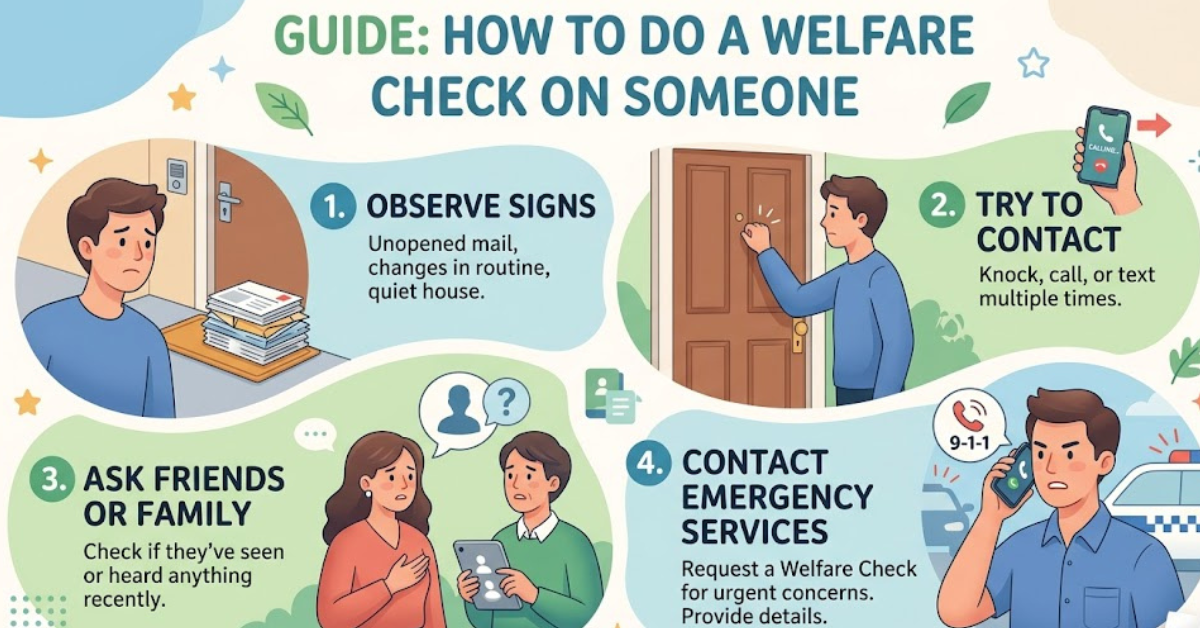
If you’re wondering how to do a welfare check on someone, the process is generally straightforward, but it should always be used responsibly.
1. Contact Local Authorities
The first step is to call your local police non-emergency number. If you believe there is immediate danger, call emergency services right away.
When requesting the check, clearly explain:
- You are requesting a welfare check
- Your relationship to the person
- Why you are concerned
This is the core step in how to do a welfare check on someone safely and effectively.
2. Provide Accurate Details
Authorities will need as much information as possible, such as:
- Full name of the person
- Address or likely location
- Phone number (if available)
- Description of the situation
- Any known medical or mental health concerns
The more accurate your information, the easier it is for officers to act quickly.
3. What Happens Next
After you request how to do a welfare check on someone, police or emergency responders will usually:
- Visit the person’s home or location
- Attempt to make contact
- Check for signs of distress or medical issues
- Call for medical assistance if needed
They may or may not provide you with full details afterward, depending on privacy laws.
Alternatives Before Requesting a Welfare Check
Sometimes, a welfare check isn’t the first step. Before going through how to do a welfare check on someone, consider:
- Calling or texting repeatedly
- Reaching out to mutual friends or family
- Checking social media activity (if appropriate)
- Visiting the location yourself (if safe)
These steps can sometimes resolve concern without involving authorities.
Legal and Ethical Considerations
Understanding how to do a welfare check on someone also means using it responsibly.
Important points:
- Misusing welfare checks can waste emergency resources
- False reports may have legal consequences in some areas
- Officers prioritize genuine safety risks
- Respect for privacy is always considered
Only request a welfare check when you truly believe someone may be in danger or unable to care for themselves.
What to Expect After a Welfare Check Request
After learning how to do a welfare check on someone, it’s also important to know what comes next.
Possible outcomes include:
- The person is safe and simply unavailable
- Medical help is provided if needed
- The person is transported for treatment or evaluation
- No contact is made, but further investigation may follow
In many cases, you may only receive a brief update due to privacy restrictions.
Practical Tips for Requesting a Welfare Check
If you ever need to follow how to do a welfare check on someone, keep these tips in mind:
- Stay calm and provide clear information
- Don’t exaggerate or guess details
- Be honest about your level of concern
- Follow up only if necessary
- Use it only for genuine safety concerns
Key Takeaways
- A welfare check is a safety-focused visit by authorities
- It should only be requested in legitimate concern situations
- Clear and accurate information speeds up response
- Privacy laws may limit what you are told afterward
- There are alternatives before contacting police
FAQ: How to Do a Welfare Check on Someone
1. What is the fastest way to request a welfare check?
Call your local non-emergency police number unless there is immediate danger. In emergencies, always dial emergency services.
2. Can I request a welfare check anonymously?
In some areas, yes—but providing your identity helps authorities assess credibility and urgency.
3. How long does a welfare check take?
It varies. Some checks take minutes, while others take longer depending on location and availability of officers.
4. Will I be told the outcome?
Not always. Due to privacy rules, you may only receive limited information after the check.
5. Can I do a welfare check on someone I’m not related to?
Yes, anyone can request it if they have genuine concern for a person’s safety.
6. Is a welfare check the same everywhere?
The process is similar globally, but procedures vary slightly depending on local law enforcement systems.
Conclusion
Knowing how to do a welfare check on someone can make a real difference when someone’s safety is in question. It’s a simple but powerful tool designed to protect individuals who may be in distress or unable to seek help themselves.
Used responsibly, it ensures that concerns are addressed quickly while respecting legal and ethical boundaries. If you ever find yourself unsure, prioritize clear communication, provide accurate details, and trust trained authorities to handle the situation appropriately.