
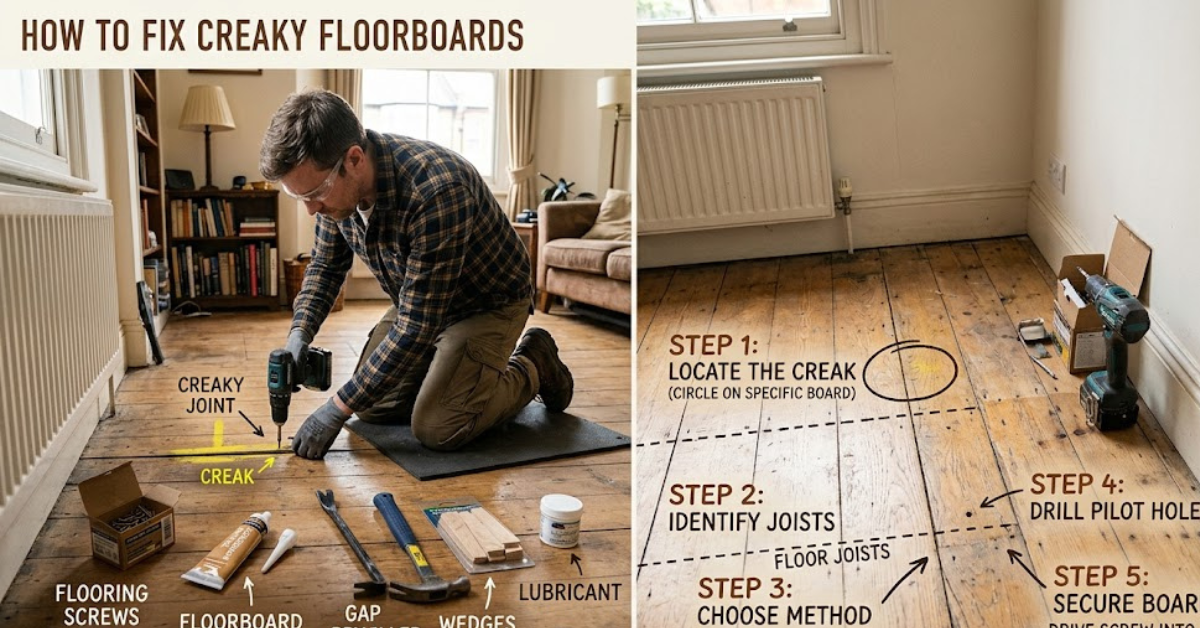

Few things are more annoying than walking across a room and hearing loud squeaks under your feet. Whether it happens in the hallway, bedroom, or stairs, noisy flooring can quickly become frustrating. The good news is that learning how to fix creaky floorboards is usually much easier than most homeowners think.
In many cases, squeaky floors are caused by loose boards, movement between timber joints, or nails rubbing against wood. With the right tools and a little patience, you can often solve the problem yourself without replacing the entire floor.
What Causes Creaky Floorboards?
Before fixing the issue, it helps to understand why floorboards creak in the first place.
Common causes include:
- Loose floorboards
- Wood shrinking over time
- Nails or screws becoming loose
- Friction between timber boards
- Gaps between the floor and joists
- Natural movement from humidity and temperature changes
Older homes are especially prone to squeaky floors because wood naturally expands and contracts over time.
How to Identify the Source of the Squeak
The first step is locating exactly where the noise comes from.
Simple Inspection Method
- Walk slowly across the floor.
- Listen carefully for squeaking sounds.
- Mark noisy spots with tape or chalk.
- Check whether the movement feels soft or loose.
Finding the exact location makes repairs much easier and prevents unnecessary work.
How to Fix Creaky Floorboards From Above
If you can access the floor surface directly, this is usually the simplest repair method.
Tighten Loose Boards
Loose floorboards are one of the most common reasons for squeaking.
What you’ll need:
- Screws
- Drill
- Wood filler
- Screwdriver
Steps:
- Locate the floor joist beneath the squeaky area.
- Drill pilot holes carefully into the board.
- Secure the board using screws instead of nails.
- Fill visible screw holes with matching wood filler.
Screws hold floorboards more firmly and reduce future movement.
Using Lubricants for Minor Squeaks
Sometimes the squeak comes from friction between boards rather than structural damage.
Effective options:
- Talcum powder
- Graphite powder
- Dry lubricant products
Sprinkle the powder between the floorboard gaps and gently work it into the cracks. This can reduce friction and stop light squeaks temporarily.
How to Fix Creaky Floorboards Under Carpet
Many people wonder how to fix creaky floorboards under carpet without removing the entire carpet. Fortunately, small squeaks can often be repaired with minimal disruption.
Carpet-Friendly Repair Method
Special breakaway screw kits are designed specifically for carpeted floors.
Steps:
- Find the squeaky spot carefully.
- Use a stud finder to locate joists.
- Insert special screws through the carpet into the joist.
- Snap off the screw head below carpet level.
This secures the floorboard without damaging the carpet surface noticeably.
How to Fix Creaky Floorboards From Below
If you have access beneath the floor through a basement or crawl space, repairs can sometimes be even more effective.
Common Underfloor Repairs
Add Wood Shims
Insert thin wood shims into small gaps between the joist and subfloor.
Apply Construction Adhesive
Adhesive strengthens loose joints and reduces movement.
Reinforce Joists
Extra support blocks can reduce flexing and squeaking.
This method often creates a more permanent solution.
How to Fix Creaky Floorboards UK Homes
Older properties in Britain frequently experience squeaky timber floors due to age and seasonal moisture changes.
When learning how to fix creaky floorboards UK homes specifically, homeowners should pay attention to:
- Traditional timber construction
- Humidity levels
- Older nail-based flooring systems
- Floorboard expansion during damp weather
Replacing old nails with screws is usually one of the most effective long-term solutions in UK properties.
Best Tools for Repairing Squeaky Floors
Having the right tools makes repairs easier and safer.
Recommended tools:
- Electric drill
- Wood screws
- Stud finder
- Hammer
- Wood filler
- Pry bar
- Carpenter’s glue
- Flashlight
Most DIY floorboard repairs require only basic household tools.
Preventing Floorboards From Squeaking Again
After fixing the problem, a few maintenance habits can help prevent future squeaks.
Helpful prevention tips:
- Keep indoor humidity stable
- Use screws instead of nails when possible
- Repair loose boards early
- Avoid excessive moisture exposure
- Reinforce weak subfloors during renovations
Preventive maintenance often extends the life of wooden flooring significantly.
When to Call a Professional
DIY methods work well for minor squeaks, but some situations require professional help.
Consider hiring a flooring expert if:
- Large floor areas feel unstable
- The floor has water damage
- Structural joists are weakened
- Squeaking continues after repairs
- Floors sag noticeably
Persistent problems may indicate deeper structural issues.
Common Mistakes to Avoid
Using Nails Instead of Screws
Nails loosen more easily over time.
Ignoring Moisture Problems
Humidity can continue causing movement if not controlled.
Overtightening Screws
Too much pressure can crack wooden boards.
Repairing Without Locating Joists
Incorrect screw placement may damage pipes or wiring.
Careful preparation prevents costly mistakes.
Frequently Asked Questions
What causes creaky floorboards?
Most squeaks happen because floorboards move against nails, joists, or neighboring boards.
Can squeaky floors be fixed without removing carpet?
Yes. Special breakaway screw systems are designed for carpeted floors.
Are creaky floorboards dangerous?
Usually not, but severe movement or sagging may indicate structural problems.
Why do older homes have squeaky floors?
Wood naturally shrinks, expands, and loosens over time, especially in older properties.
Should I use screws or nails?
Screws are generally more effective because they hold boards tightly for longer periods.
Conclusion
Learning how to fix creaky floorboards can save money, improve comfort, and make your home feel quieter and more solid. In many cases, simple DIY methods like tightening loose boards, adding screws, or reducing friction can solve the problem quickly.
Whether you’re dealing with squeaky timber floors, noisy hallways, or trying to figure out how to fix creaky floorboards under carpet, the key is identifying the source of movement and using the right repair method. With proper maintenance and timely repairs, your floors can remain quiet, stable, and durable for years to come.