
If you’ve ever picked up a guitar and felt confused by lines, numbers, and symbols, you’re not alone. Learning tablature is one of the easiest ways to start playing real songs without needing deep music theory knowledge.
Guitar tabs are a simplified system that shows exactly where to place your fingers on the fretboard. Once you understand the basics, you can start playing songs much faster than you might expect.
In this guide, you’ll learn everything step by step so you can start playing confidently—even if you’ve never read music before.
What Are Guitar Tabs? (Basic Overview)
Before learning the system, it helps to understand what it represents.
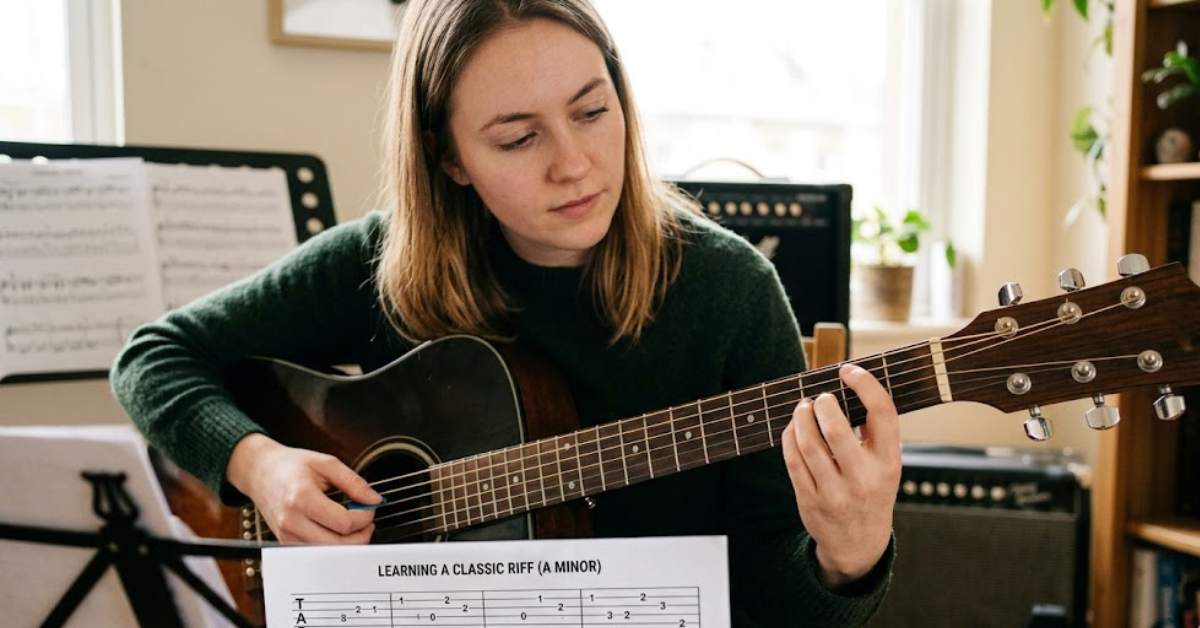
Guitar tabs use six horizontal lines that correspond to the six strings:
- Top line = high E string
- Bottom line = low E string
Numbers on the lines show which fret to press.
For example:
- “0” = open string
- “1” = first fret
- “2” = second fret
When numbers are stacked vertically, it means you play them together as a chord.
This simple system is why beginners often prefer tabs over traditional sheet music.
Understanding Numbers on Tabs
One of the key basics is learning how fret numbers work.
Each number tells you where to place your finger:
- 0 → play open string
- 1 → press first fret
- 2 → press second fret
This forms the foundation of almost every song you’ll learn.
Common Symbols Explained
Tabs often include symbols that show playing techniques:
- h = hammer-on
- p = pull-off
- b = bend
- / = slide up
- \ = slide down
- x = muted string
These symbols help you play the song more accurately and closer to the original recording.
Step-by-Step Beginner Method
If you’re just starting out, follow this simple approach:
1: Learn single notes
Play one number at a time to understand fret positions.
2: Try simple melodies
Practice easy songs using one string.
3: Learn chords in tabs
When numbers stack vertically, strum them together.
4: Practice with timing
Play along with the song to understand rhythm.
This gradual method helps you build confidence without feeling overwhelmed.
Tabs and Chords Together
Many songs combine chord names with tablature.
Chords are usually written above the tab, while the tab shows exact finger placement.
This combination is common in acoustic and pop music and helps you understand both rhythm and melody at the same time.
Fingerstyle Tab Reading
Fingerstyle playing uses a slightly different approach.
Instead of strumming, each number represents a plucked string:
- Thumb often handles bass notes
- Fingers handle melody notes
Fingerstyle tabs may look complex, but they follow the same basic rules. The key is to slow down and separate each note.
Using a Capo
A capo changes the pitch of your guitar but not how you read the tab.
You still play the same fret positions shown in the tab, while the capo shifts the sound higher.
This is commonly used in acoustic songs to change key easily.
Tabs in Apps and Digital Tools
Modern apps like Songsterr make learning even easier.
These platforms often include:
- Play-along tracks
- Scrolling timing
- Highlighted notes
They help you stay in rhythm while practicing.
Tabs with Lyrics
Some tablature includes lyrics underneath the notes.
This helps you:
- Match chords with words
- Understand song structure
- Keep timing consistent
It’s especially useful for singers who also play guitar.
Common Beginner Mistakes
Avoid these early mistakes:
- Playing too fast
- Ignoring rhythm
- Forgetting to tune your guitar
- Skipping symbols and techniques
Slow, steady practice always leads to better progress.
FAQs
Do I need to read music to use tabs?
No, tabs are designed to be simple and beginner-friendly.
How long does it take to learn the basics?
Most beginners understand the basics within a few hours.
Are guitar tabs always correct?
Not always—some online tabs may contain errors.
Are tabs good for fingerstyle?
Yes, fingerstyle players often rely heavily on tabs.
Conclusion
Learning tablature is one of the fastest ways to start playing real music on guitar. It removes the complexity of traditional notation and gives you a clear, visual way to learn songs.
Whether you’re practicing chords, fingerstyle, or simple melodies, tabs provide a straightforward roadmap.
With consistent practice and patience, you’ll quickly become comfortable reading them and playing your favorite songs with confidence.