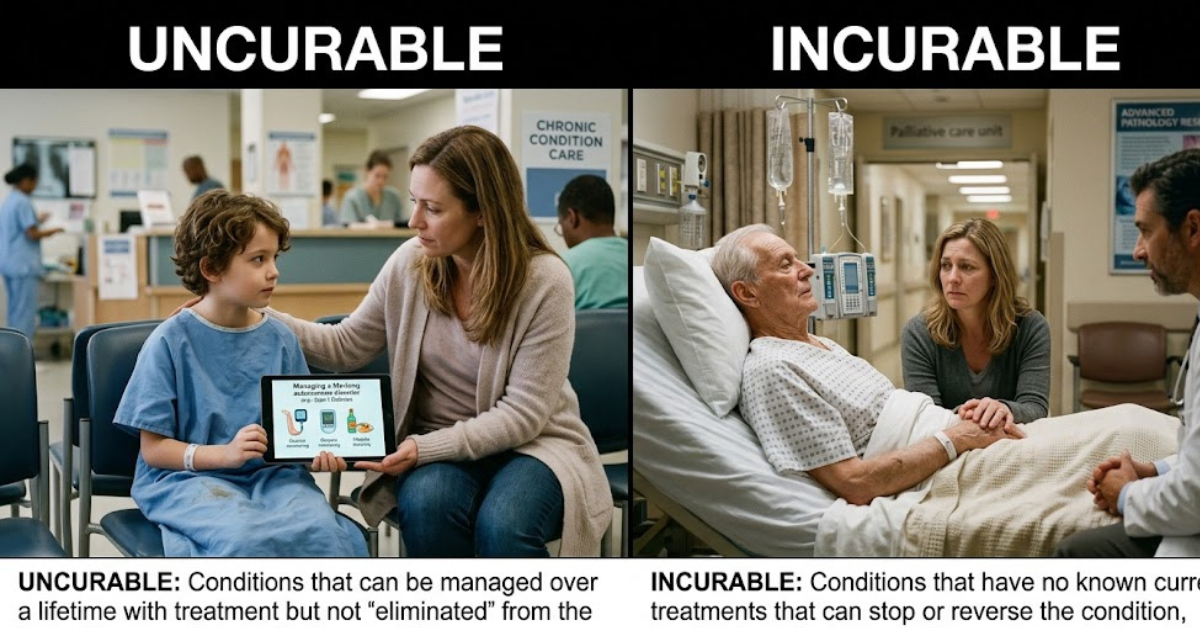

English can be tricky, especially when two words look almost identical but don’t always mean the same thing. That’s exactly the case with uncurable vs incurable—a pair that confuses even confident writers.
At first glance, both words seem interchangeable, but in modern English, only one is widely accepted in standard usage. Understanding the difference between uncurable vs incurable helps you write more accurately, especially in academic, medical, or professional contexts.
In this guide, we’ll break down their meanings, usage, grammar background, and real-world examples so you’ll never confuse them again.
Uncurable vs Incurable: What Do They Mean?
When comparing uncurable vs incurable, the main difference lies in usage and acceptance rather than meaning.
Incurable
“Incurable” is the correct and widely used term in modern English. It refers to something that cannot be cured or healed.
Examples:
- An incurable disease
- An incurable condition
- Incurable illness
It is commonly used in medical, scientific, and everyday language.
Uncurable
“Uncurable” also exists in English, but it is considered outdated or nonstandard in most modern usage.
While people may still understand it, it is rarely used in professional writing today.
In simple terms:
- Incurable = standard and correct
- Uncurable = outdated and rarely used
Uncurable vs Incurable in Modern English Usage
When looking at uncurable vs incurable, modern dictionaries and language experts strongly prefer “incurable.”
Why “incurable” is preferred:
- It follows standard Latin-based word formation
- It is widely accepted in medical literature
- It appears more frequently in academic writing
“Uncurable” survives mostly in older texts or informal speech, but it is not recommended in formal writing.
Grammar Breakdown of Uncurable vs Incurable
Understanding uncurable vs incurable becomes easier when you break down the word structure.
“Incurable”
- Prefix: “in-” meaning “not”
- Root: “curable” meaning “able to be cured”
So, “incurable” literally means “not able to be cured.”
“Uncurable”
- Prefix: “un-” meaning “not”
- Root: “curable”
While logically correct, English has evolved to prefer “in-” in this case for smoother word formation.
Common Contexts Where Incurable is Used
The term “incurable” is widely used across different fields:
Medical usage
Doctors often describe diseases or conditions as incurable when no known treatment can fully eliminate them.
Emotional or metaphorical usage
- Incurable optimism
- Incurable romantic
- Incurable habit
This shows that the word isn’t limited to medicine.
Why People Still Search for Uncurable vs Incurable
The confusion around uncurable vs incurable usually comes from:
- Older books or texts using “uncurable”
- Similar structure with other “un-” words
- Misunderstanding of prefix rules in English
Because English evolves over time, older forms sometimes remain in circulation even when they are no longer preferred.
Which One Should You Use?
If you’re writing today, the answer is simple:
Use incurable.
It is:
- Grammatically correct
- Widely accepted
- Professionally appropriate
- Clear and natural in modern English
“Uncurable” may still be understood, but it can make writing look outdated or less polished.
Uncurable or Incurable in Everyday Writing
In casual conversation, you might still hear both forms, but in writing—especially blogs, essays, or professional content—“incurable” is the safe choice.
Examples:
- Correct: “He has an incurable condition.”
- Less preferred: “He has an uncurable condition.”
The meaning stays the same, but style and correctness matter in formal contexts.
FAQs
Is “uncurable” a correct English word?
It exists historically but is considered outdated in modern English.
What is the correct term: uncurable vs incurable?
“Incurable” is the correct and standard form used today.
Can I use “uncurable” in writing?
You can, but it is not recommended for professional or academic writing.
Why do both words exist?
They come from different prefix formations (“un-” and “in-”), but language usage has standardized “incurable.”
Does incurable only apply to diseases?
No, it can also describe habits, traits, or emotional states.
Conclusion
The confusion between uncurable vs incurable is understandable, but the answer is actually quite simple. While both words technically convey the idea of something that cannot be cured, only “incurable” is widely accepted in modern English.
If you want your writing to sound natural, correct, and professional, stick with “incurable.” It’s the version used in medicine, literature, and everyday communication.
Understanding small differences like this not only improves your grammar but also makes your writing clearer and more credible overall.